
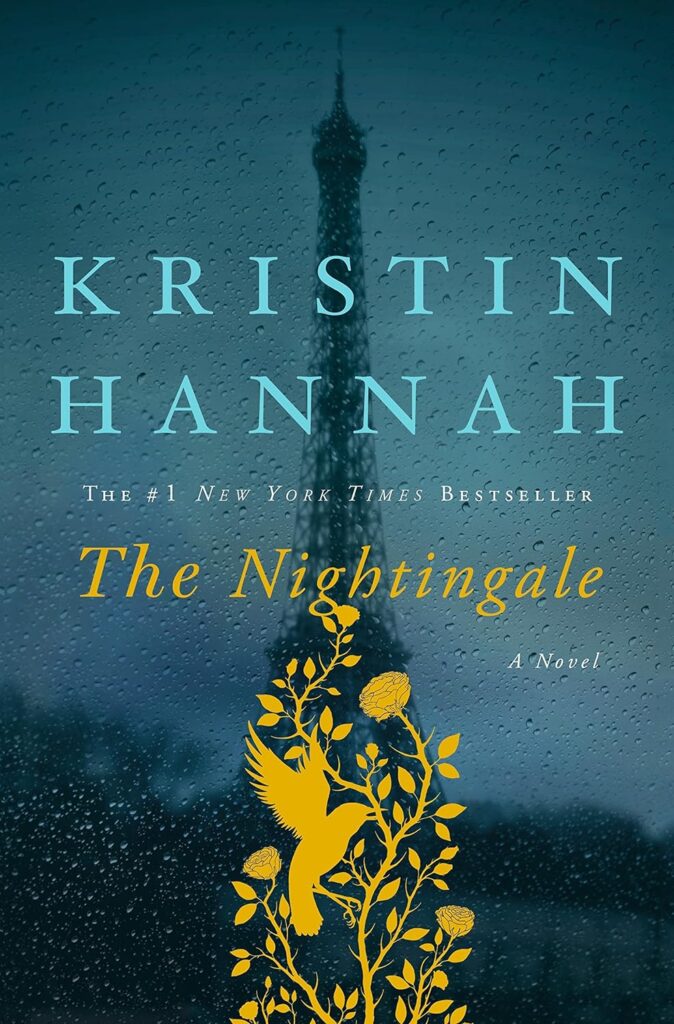
Snow falls and silent hunger waits in the bones. In The Nightingale, houses stand hollow while voices hush and ration lines matter more than hope. Sisters tethered by blood unravel in the churn of war and famine.
Courage means what you can carry in a single breath. Survival splits the heart between memory and instinct. Kristin Hannah writes with a quiet patience, pressing hard edges into the soft weight of loss.
This novel isn’t just a story. It is a testament. The Nightingale rises beyond the usual wartime epic, shaping a new sentence for what it means to fight and keep living. Family and fear, sacrifice and the ache of loyalty—all offered in a language bare as winter. Readers have carried its shadows long after the last page. Its influence trails behind, echoed in lists of Must-Read Kindle Unlimited Titles, passed from hand to hand in search of something true.
Table of Contents
Overview and Historical Context of ‘The Nightingale’
Lines are drawn sharp in The Nightingale. The world shrinks to ruined streets and cold houses. War stains the edges of daily life, its shadow relentless. Beneath the surface, history beats loud as a drum. The story’s power is tied to its place and time—France under Nazi rule, 1939 to 1945. Every detail carries the weight of memory. Each moment, a step through darkness.
Kristin Hannah’s Approach to Historical Fiction
Kristin Hannah returned to history as if running a finger down an old scar. She did not start in the past. Earlier novels settled in parts of America, characters folding into small hopes and hidden pain. But with The Nightingale, Hannah pressed harder. Her focus sharpened, her language stripped bare. The ordinary world vanished. History became the bone beneath each page.
Hannah’s process for writing The Nightingale rested on two things: immersion and restraint. She lived inside archives and letters, reading firsthand accounts of women in wartime France. Eyewitness detail, collected slow as snow. The story, she once said, was shaped by mothers, wives, and sisters—those who went unnamed in most history books. She wrote with them at her shoulder, their secrets shaping her sentences.
A spare style emerged. Dialogue was clipped. Descriptions ran lean, like hunger itself. Hannah aimed for emotional truth instead of spectacle. Each choice—each omission—built a quiet trust. Her fiction asked not for belief, but for patience. Nothing is rushed. Even the greatest sacrifices come as quiet acts, shaped by fear, duty, and the pull of family.
Hannah spoke about her writing and research process in her own words in this interview with The Novelry. Her honesty adds another layer to the book’s authenticity, showing how lived experience and patient study shaped every line.
Setting and Atmosphere of Nazi-Occupied France
 Photo by SAFEE a 501(c)3 corporation
France folds under the noise of German boots. The air presses in, thick and sharp. Towns wear silence as a second skin, neighbors passing without so much as a look. Barbed wire crawls up stone walls. Nights break into sirens and thin prayers.
Hannah’s France feels lived-in, gray and starved. Details cling like a chill: bread hard as rock, forests cut by gunfire, old churches now crowded with the lost. Nothing is certain except danger. Even sunlight looks tired, filtered by smoke and fear.
Daily life buckles. Mothers barter rings for potatoes. Children vanish into forests. Partisans slip through cracks, leave coded marks behind. The Nightingale does not flinch. Every hardship, every stolen moment of hope, stains the page. The effect is blunt. Reality arrives with the hush of curfew, the pulse of hunger, the slow rot of waiting for news.
In this world, nothing stands apart. Sacrifice is a silent companion. Suffering is quiet, ordinary, inevitable. Each setting—whether village, farm, or mountain path—serves the story with brutal clarity. Immersion is not escape. It is exposure. Raw and unadorned.
Plot Summary and Main Characters in ‘The Nightingale’
War hollows out the quiet. Names lose their warmth. In The Nightingale, each character holds a silence shaped by fear, loyalty, and regret. Kristin Hannah follows two sisters, Vianne and Isabelle, as the world tears at their edges. Their stories cross, split, and circle back, each marked by hunger and hard choices. Through them, the cost of survival turns personal, every act a weight on the soul.
Vianne Mauriac: The Reluctant Hero
Vianne Mauriac moves through the story like breath on glass. Careful, slow, nearly invisible. She is the older sister, left behind with her daughter and a house emptied by war. Vianne’s fear is quiet but deep—a terror pressed into every gesture. She learns to make peace with hunger, with curfews, with the chill of strangers at her table. The village of Carriveau shrinks around her, streets colder and faces sharper as Germany closes its fist around France.
Vianne does not start as a fighter. She does not seek danger. At first, her only wish is to keep her child safe, to disappear inside the bones of daily life. Survival is her only weapon. But safety unravels piece by piece. She is forced to make choices under threat, her world shrinking with each order—Jewish neighbors taken, friends vanished, family turned against family.
Loss shapes her. So does guilt. Each kindness she offers comes with risk, but also with a bitter line of self-judgment. She is no hero by nature. Circumstance twists her, refines her. By the end, Vianne’s strength is not shouted. She saves with small cuts—sheltering children, facing violence without promise of reward. Her arc is slow and bruised. In the ruins, Vianne finds a hollow bravery, one marked not by loud refusal but by the steady ache of endurance.
Details about Vianne’s character and those around her can be found in the Character List for The Nightingale.
Isabelle Rossignol: The Nightingale and the Resistance
 Photo by Hub JACQU
Isabelle Rossignol splinters every silence. She moves sharp, reckless. Seventeen and restless, a heart like wire. Her anger is open—her defiance a shield. Unlike Vianne, Isabelle runs toward danger, unable to watch the world close in from a distance. After being sent away from one boarding school after another, she returns to Paris, too hungry for meaning to sit still. War, for her, is not something to wait out. It is a thing to be split wide, to be answered.
She earns the code name ‘The Nightingale’ for the lives she rescues, leading downed airmen and refugees over mountain passes. Each journey is a wager with death, winter biting through skin and will. The Resistance reshapes her, but does not erase the wounds built from childhood: the loss of her mother, her father’s absence, the ache for purpose.
Isabelle works in shadows, but her courage burns loud. She fights not only the occupiers, but her own loneliness, every action a demand to be seen. Sacrifice strips her, layer by layer, leaving something fragile and new underneath.
The push and pull between Vianne and Isabelle grounds the novel. War splits them, but memory stitches them together again. Their choices mark them, each girl rewriting what it means to be brave.
For a detailed breakdown of Isabelle and other key figures, visit the Character List – The Nightingale.
Major Themes Explored in ‘The Nightingale’
The Nightingale stands on heavy ground. Sorrow lines every wall, but so does quiet hope. The story presses into the cost of war, grinding down the people left behind. Each major theme grows out of survival, loss, and the slow churn of loyalty. The weight is never lifted, but it shifts in every chapter.
Resilience and Survival in Wartime
War strips life to the bone. Food vanishes, warmth gone, trust shattered. Vianne and Isabelle do not bend in the wind. They tense, break, then stitch themselves together with every loss. Every day drags new tests. The threat is constant, the choices ugly, the cost both physical and silent.
Each sister wears a mask. Fear knits itself beneath the skin. Endurance here is more than stubbornness. It’s hunger that burns, secrets that choke, grief that settles into the bones. Vianne learns to bargain and bow her head, all for her child’s breath. Isabelle chooses defiance, her voice sharp against the silence left by retreating hope.
The story does not let them rest. Small comforts vanish. The tension never ends. Moments of kindness and scraps of bread stand for all that remains of normal life. The night is cold. The silence has weight.
For a broader perspective on these themes and their deeper echoes throughout the novel, explore the The Nightingale Themes.
Sisterhood and Family Bonds
 Photo by Thirdman
Family sits at the core, heavy as stone. Vianne and Isabelle circle each other, wounded by years of loss. Old pain shadows every word. Their mother gone, their father cold and distant. They stand linked by duty but separated by anger.
War breaks the shell. Forced together, then pulled apart again, the sisters learn the meaning of sacrifice. Their love scars, then binds. Small gestures—an arm held out, a room kept safe—become the strongest shield against all that war tears loose.
At first, trust between them thins to nothing. Old wounds bleed into new ones. Yet survival grows from their bond. Vianne finds courage in Isabelle’s stubborn light. Isabelle finds purpose in Vianne’s steadiness. The story does not offer easy reunions. Each act of care is earned, each forgiveness paid for in regret.
Beyond blood, The Nightingale reminds us that family is built, not given. Shaped by choice, tested by grief, strengthened by quiet love.
Women’s Roles and Agency in WWII Literature
History remembers men with guns. Rarely the women in shadows. The Nightingale moves the light. Vianne and Isabelle walk paths most stories do not follow. Teachers, caretakers, spies, smugglers. Each act risks ruin, but each claims a stake in survival.
Women in this story do more than wait. They move and act. Vianne hides children, risks her life in acts small but dangerous. Isabelle runs mountains, guides hidden men home. Both lose, both gain, both change what is possible.
The novel splits old roles open. Women here do not only endure. They decide, protect, betray, save. They hold families together. They break rules when the rules mean death. They make the cost of courage plain—suffering, silence, sometimes hope.
This shift echoes across WWII fiction. A new view, sharper and closer, shaped by the memory of those who rarely got a name. Kristin Hannah’s work adds to the growing record of women who fought, often unseen, while the world tried to look away.
For readers interested in the exploration of women’s agency and power in historical settings, the Review of The Lost Apothecary also features women defying expectations and shaping their destinies.
Critical Reception and Legacy of ‘The Nightingale’
In silence, the story reverberates. Pressed between pages, the ache does not fade. “The Nightingale” leaves marks that outlast the last word—awards stacked, stories reimagined, community still humming with memory. Its wake can be traced through gold-plated prizes, headlines of film, and voices, scattered and loyal, who will not let go.
Awards, Adaptations, and Cultural Impact
Recognition arrived early and did not wane. “The Nightingale” swept up international prizes, its name recurring on year-end lists. There was the Goodreads Choice Award for Historical Fiction, echoing the weight readers placed on its honesty. The novel spent weeks locked atop bestseller charts. Critics called it stripped, brutal, necessary.
A film adaptation has kept its own place in the news. In 2019, production began, with Mélanie Laurent directing. Dakota and Elle Fanning pledged to inhabit its twin hearts on screen. Release dates shifted, but anticipation stuck. No one mistakes the wait for silence. For more on the adaptation and its ripple effect, read about the film adaptation and cultural impact of The Nightingale.
The influence is blunt, persistent. WWII novels are measured before and after “The Nightingale.” Stories now reach for the quiet, everyday courage of women. The book’s presence feels like smoke in the room—never visible, hard to escape. Writers now shape heroines out of longing and fear, not just gunfire.
Outside of fiction, the novel changed how some discuss war. Teachers use it. Book clubs return, again and again, to its scenes. Ordinary readers seek meaning there, or release. Its words have crossed borders, translated into dozens of languages.
Reader Response and Community Discussion
People carry the novel like a scar. Book clubs fill with talk—painful, slow, unresolved. Anniversaries of its publication prompt rereads. Reader reviews press close to the wound. Many speak of weeping, of missing sleep. Few are untouched.
Online, discussions bloom and wilt. Some find comfort in the realism. Others ache for the hope still left at the end. The most striking thing is the echo: how easily The Nightingale’s pain becomes collective. See firsthand the depth of feeling in this community book discussion on Facebook, where readers spill into the comments, holding memory and meaning tight.
Book club guides keep the conversation moving. Prompts urge readers to compare wounds, judge choices, examine silence. The Geneva Library’s discussion guide provides structured questions, drawing out the small, rough truths at the center. Some use the guide to uncover details buried on a second or third read, proof of that lingering pull.
Popularity does not fade. New paperbacks, new languages, new hands. In the quiet, “The Nightingale” endures, no less sharp with time.
Recommended Reads for Fans of ‘The Nightingale’
Stories shape our memory of war. “The Nightingale” sits heavy with its two voices echoing through occupied France—one quiet, one loud. Its sharp focus on heartbreak, endurance, and hidden heroism lingers long after the last page. Many search for novels with a similar weight. These stories pull the past close, sheltering courage where it aches most. Below are books that gather the same kind of darkness and hope, pulling women to the center.
Historical Fiction With Strong Female Leads
 Photo by cottonbro studio
Some stories claw into history by following women who refuse silence. If “The Nightingale” spoke to you with its exhausted grace and impossible choice, these novels press into that same quiet struggle.
- “Lilac Girls” by Martha Hall Kelly Three women caught in the fracture of World War II. One fights in the French Resistance, one is sent to Ravensbrück, one moves among diplomats in New York. Lives converge under the shadow of cruelty. Every chapter cuts sharp, echoing the steady ache of Kristin Hannah’s writing.
- “Code Name Verity” by Elizabeth Wein Two friends. One a spy, one a pilot. Caught behind enemy lines in France. Survival as confession, truth as a bargaining chip. The book moves in fragments and confessions, carving out a tribute to loyalty as fierce as blood.
- “The Book Thief” by Markus Zusak A young girl in Nazi Germany, haunted by hunger and loss. She steals words to build something like hope. The story is strange and grave, told from the voice of Death itself. Every page is raw—each loss written in the silence between bombs.
- “The Alice Network” by Kate Quinn A net of women spies in two wars. The cost of secrets, betrayal, old wounds unsealed by a young woman searching for her cousin. Ruthless and unflinching, it carries the ghost of Kristin Hannah’s unsparing prose.
For more lists featuring strong, unforgettable women who anchor their stories, Historical Fiction Featuring Strong Female Protagonists highlights books where women fight their way through history’s wreckage. Each title gathers urgency and sorrow, held together by grit and haunted resolve.
Other Notable WWII Novels
War never stays still. Each novel below shifts the light, refusing neat endings, finding the small flickers in ruin. These books often rest beside “The Nightingale” on shelves, paired by readers who know that true cost always hides in plain sight.
- “All the Light We Cannot See” by Anthony Doerr A blind girl in Saint-Malo. A boy pressed into the Wehrmacht. Europe torn under Allied fire. The novel carves through silence and static, its language stripped thin, beauty where pain collects.
- “Sarah’s Key” by Tatiana de Rosnay Paris, 1942. A child torn from her family, a secret locked away. The story jumps across years, dragging the old wounds into the open. Loss colors every line.
- “Salt to the Sea” by Ruta Sepetys Four paths cross in the chaos at the war’s end. Each voice is desperate, carved by hunger and regret. The sinking of the Wilhelm Gustloff echoes survivor’s guilt, pressing sorrow into every page.
Many readers also find lists of must-read WWII fiction to be a reliable way to find these shadows and echoes. Books appearing beside “The Nightingale” often face courage and loss without flinching, letting the cold truth stand without comfort.
For broader perspectives and discussions on how women’s voices shape these stories, you can dive into community conversations at Strong and intelligent women in Historical Fiction. There, the names and stories change. The urgency does not. Each book holds a piece of what was lost—and what had to be found.