
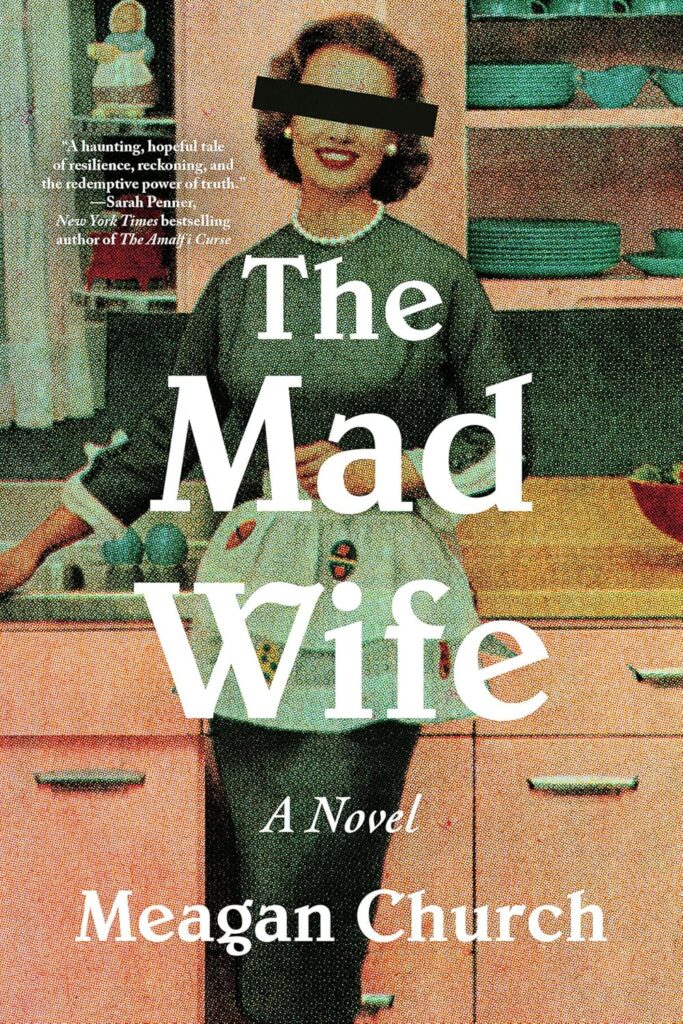
Welcome to this comprehensive review of The Mad Wife: A Novel by Meagan Church, the powerful historical fiction debut that’s captivating readers with its piercing examination of postpartum depression, societal expectations, and the dangerous diagnosis of “female hysteria” in 1950s America. If you’re looking for “The Mad Wife book review,” “The Mad Wife summary,” or insights into its themes and characters, you’ve come to the right place. Released on September 30, 2025, this psychological drama has already earned the Barnes & Noble October Fiction Pick distinction and is resonating deeply with readers who appreciate complex, character-driven narratives. Set against the backdrop of picture-perfect suburban America, the novel follows Lulu Mayfield as she unravels beneath the weight of impossible expectations. Whether you’re drawn to historical fiction with a feminist edge or psychological thrillers that explore women’s inner lives, this article explores why The Mad Wife deserves a spot on your reading list. Visit The Literary Compass for more insightful book reviews and literary recommendations.
Table of Contents
- About the Author: Meagan Church
- Spoiler-Free Plot Summary of The Mad Wife
- In-Depth Character Analysis
- Key Themes and Motifs
- Critical Reception and Reader Feedback
- Why Read The Mad Wife?
- Similar Books to The Mad Wife
- Book Club Discussion Questions
- FAQ: Common Questions About The Mad Wife
About the Author: Meagan Church
From Freelance Writer to Bestselling Novelist
Meagan Church has established herself as one of contemporary fiction’s most compelling voices, crafting emotionally-charged novels that illuminate forgotten corners of American history. With a B.A. in English from Indiana University, Church built her career as a freelance writer before transitioning to fiction. She now serves as an adjunct for Drexel University’s MFA in creative writing program and helps aspiring authors through editing, coaching, and workshops.
Church’s bibliography includes The Last Carolina Girl and The Girls We Sent Away, which became a Southern indie bestseller and was selected as the North Carolina Reads state-wide book club pick for 2025. Her work consistently explores themes of identity, resilience, and the untold stories of women navigating restrictive social landscapes. Born in the Midwest, Church now lives in North Carolina with her high school sweetheart and three children, drawing from both regional perspectives to create richly textured narratives.
What sets Church apart is her ability to balance meticulous historical research with deeply empathetic character development. She doesn’t simply recreate the past; she invites readers to feel the claustrophobic weight of societal expectations, the suffocating grip of mental health stigma, and the quiet desperation of women silenced by the very systems meant to protect them. As one reviewer noted, Church has a gift for “lighting dark corners of the past” while making those shadows feel urgently relevant to contemporary readers.
Her approach to The Mad Wife demonstrates this mastery. By setting the story in the conformist 1950s—an era often romanticized for its apparent stability—Church exposes the psychological violence inflicted on women who dared to struggle, suffer, or simply exist outside narrow definitions of feminine propriety. The result is a novel that functions both as historical documentation and searing social commentary.

Spoiler-Free Plot Summary of The Mad Wife
The Mad Wife introduces us to Lulu Mayfield, a young mother who has spent the last five years perfecting the art of 1950s domesticity. On the surface, she’s achieved the American Dream: a devoted husband, two children, a comfortable suburban home, and gelatin salads that inspire neighborhood envy. But beneath her carefully maintained facade, Lulu carries the weight of tragic memories and the exhausting labor of meeting impossible expectations.
The novel opens after Lulu gives birth to her second child, a daughter, and immediately we sense something shifting beneath the polished exterior of her life. The sleepless nights stretch into delirious days. The constant demands of motherhood collide with her husband’s expectations and society’s rigid rules about proper wifely behavior. Lulu begins to feel herself fracturing under the pressure, but in 1950s America, a woman’s complaints about motherhood aren’t met with compassion—they’re pathologized.
When a new neighbor named Bitsy moves in next door, Lulu’s unraveling accelerates. There’s something unsettling about Bitsy’s perpetual smile, something that doesn’t quite add up about her perfect presentation. As Lulu’s fixation on her neighbor deepens, she uncovers disturbing truths that make her question everything she thought she understood about her own life, her marriage, and the supposedly idyllic community surrounding her.
But as Lulu digs deeper into Bitsy’s secrets, those around her—her husband, her doctor, her friends—begin questioning her sanity. The more insistently she speaks her truth, the more readily she’s dismissed as hysterical, unstable, mad. The novel’s central tension becomes not just what Lulu discovers about Bitsy, but whether anyone will believe her before she loses herself entirely.
Church structures the narrative with short, punchy chapters that mirror Lulu’s fragmented mental state while maintaining propulsive pacing. At approximately 336 pages, the book reads quickly despite its heavy themes, drawing comparisons to Sylvia Plath’s The Bell Jar and Michael Cunningham’s The Hours. But The Mad Wife carves its own distinctive space, blending domestic drama with psychological suspense in ways that feel both historically grounded and uncomfortably contemporary.
The novel refuses to give easy answers. Is Lulu experiencing postpartum depression exacerbated by isolation and impossible expectations? Is she genuinely uncovering dark secrets her community wants buried? Or is the truth somewhere more complex, where both realities coexist? Church keeps readers off-balance, questioning their own assumptions about reliability, sanity, and the thin line between justified paranoia and actual mental illness.
What makes the plot especially compelling is how it uses the thriller framework to explore serious issues about women’s mental health, medical gaslighting, and the weaponization of psychiatric diagnoses against women who inconvenience patriarchal systems. The mystery of what’s really happening—to Lulu, to Bitsy, to the other women in their neighborhood—becomes inseparable from larger questions about who gets to define reality and whose version of events society accepts as truth.
In-Depth Character Analysis
Lulu Mayfield: A Woman on the Edge
Lulu Mayfield stands as one of contemporary fiction’s most nuanced explorations of postpartum depression and female psychological distress. Church refuses to simplify her protagonist into either victim or unreliable narrator; instead, Lulu exists in the complicated space between. She’s simultaneously exhausted and hypervigilant, desperately trying to maintain control while feeling it slip through her fingers like water.
What makes Lulu so compelling is her awareness of her own performance. She knows she’s playing a role—the Perfect Housewife, the Devoted Mother, the Uncomplaining Wife—and she’s intimately familiar with the script. Her gelatin salads aren’t just food; they’re social currency, proof of her competence and conformity. Her spotless home isn’t just a living space; it’s evidence that she’s succeeding at womanhood as 1950s America defines it.
But beneath the performance, Lulu carries trauma that the novel gradually reveals. Church masterfully parcels out information about Lulu’s past, allowing readers to understand how previous losses and disappointments have shaped her current psychological state. The birth of her second child doesn’t just trigger postpartum depression; it reopens old wounds and forces Lulu to confront buried grief.
Lulu’s obsession with Bitsy functions on multiple levels. On one hand, it’s a classic projection—Lulu sees in her neighbor’s seemingly perfect facade a mirror of her own act. On another level, it represents Lulu’s attempt to focus her spiraling anxiety on something external, something she might control or at least understand. And on yet another level, it may be genuine intuition that something is deeply wrong, that the smiling masks worn by suburban housewives hide desperate secrets.
Church also gives Lulu moments of dark humor and sharp observation that prevent her from becoming a one-note character of suffering. Lulu notices the absurdities of her world—the way dishwashers are presented as lavish gifts rather than labor-saving necessities, the competitive undercurrents of neighborhood card games, the way women police each other’s adherence to unspoken rules. These observations ground her intelligence and make her skepticism feel earned rather than paranoid.
Supporting Characters: The Ensemble of 1950s Suburbia
Lulu’s Husband (name withheld to avoid spoilers): Church crafts a husband who embodies the well-meaning but ultimately complicit man of his era. He’s not overtly cruel, but his inability to see beyond societal scripts makes him dangerous to Lulu’s wellbeing. When she expresses distress, he responds with the era’s approved remedies—doctor visits, rest, perhaps medication—never questioning whether the problem might be the impossible expectations placed on her rather than any deficiency in Lulu herself.
Bitsy: The enigmatic neighbor serves as both plot device and thematic mirror. Her constant smile and perfect presentation initially seem to mark her as everything Lulu fears she’s failing to be. But as layers peel away, Bitsy’s story illuminates how all the women in this community wear masks, how survival requires performance, and how judgment between women often masks shared suffering.
The Doctor: Representing the medical establishment’s approach to women’s mental health in the 1950s, this character embodies the era’s dangerous conflation of female distress with hysteria. His prescriptions and diagnoses reveal how psychiatric authority was weaponized against women who struggled, turning reasonable responses to unreasonable circumstances into pathology requiring correction.
Neighborhood Women: The supporting cast of wives and mothers who populate Lulu’s world function collectively as both Greek chorus and cautionary tale. Some show flashes of understanding or solidarity; others police conformity with zealous fervor. Together, they represent the community pressure that makes authentic vulnerability nearly impossible.
Church avoids caricature in her character development. Even the most seemingly unsympathetic figures receive moments of complexity, suggesting that the real villain isn’t individual people but the rigid social system that damages everyone it touches.
![Image: Women at 1950s card game or social gathering]
Key Themes and Motifs
The Performance of Femininity
The Mad Wife excels in exposing how 1950s suburban womanhood required constant, exhausting performance. Lulu doesn’t just keep house; she stages domesticity for an ever-present audience. Her gelatin salads must be perfect not because her family prefers them but because they signal her success at womanhood. Her smile must never falter, her complaints must remain unvoiced, her exhaustion must stay invisible.
Church draws explicit parallels to contemporary pressures on women, suggesting that while the specific demands have evolved, the fundamental expectation that women perform flawless femininity remains. The “ideal woman” of today faces different standards—career success, fitness culture, Instagram-worthy homes—but the underlying message that women’s worth depends on meeting impossible ideals persists.
Medical Gaslighting and the Weaponization of “Hysteria”
The novel’s most chilling theme involves how mental health diagnoses were used to silence women who challenged patriarchal authority. When Lulu voices concerns, questions authority, or simply struggles with the demands placed on her, she’s pathologized rather than believed. The label “hysterical” becomes a tool for dismissing legitimate grievances and controlling unruly female behavior.
This theme resonates powerfully with contemporary discussions of medical gaslighting, where women’s pain and concerns are routinely dismissed by healthcare providers. Church draws a through-line from 1950s psychiatry’s treatment of “difficult” women to ongoing gender disparities in medical care, where women’s symptoms are more likely to be attributed to psychological rather than physical causes.
Postpartum Depression and Maternal Ambivalence
With unflinching honesty, The Mad Wife explores postpartum depression and the taboo subject of maternal ambivalence. Lulu loves her children but also feels overwhelmed, resentful, and sometimes frightened by motherhood’s demands. In the 1950s—and, Church suggests, still today—admitting these feelings marks a woman as deficient, unnatural, mad.
The novel compassionately depicts how postpartum depression manifests not just in sadness but in anxiety, intrusive thoughts, and a sense of unreality. Church doesn’t sensationalize these symptoms but presents them with clinical accuracy while maintaining Lulu’s humanity and our empathy for her struggle.
Secrets, Lies, and Community Complicity
Beneath the manicured lawns and friendly waves, Church’s suburban neighborhood harbors dark secrets. The novel explores how communities maintain their pleasant facades by refusing to acknowledge uncomfortable truths, how individuals become complicit in ongoing harms through silence, and how the pressure to maintain appearances prevents intervention in abuse and suffering.
This theme extends beyond individual secrets to examine systemic complicity—how institutions (medical, social, familial) work together to maintain order by silencing dissent and dismissing those who threaten stability by speaking uncomfortable truths.
Identity and Authenticity
At its core, The Mad Wife asks: Who are you when stripped of all the roles you perform? Lulu’s unraveling involves losing her grip on the scripts she’s been given, which is simultaneously terrifying and potentially liberating. The novel suggests that “madness” might sometimes be an authentic response to insane circumstances, and that the path to genuine selfhood requires rejecting the false identities imposed by others.
The Thin Line Between Paranoia and Perception
Church brilliantly exploits the thriller genre’s conventions to explore epistemological questions about reality, reliability, and who gets to define truth. Is Lulu’s growing suspicion about Bitsy legitimate intuition or evidence of her deteriorating mental state? The novel suggests these aren’t mutually exclusive—that trauma and distress can simultaneously sharpen certain perceptions while distorting others.
This theme invites readers to examine their own assumptions about reliability. We’re conditioned to distrust narrators labeled “unstable,” but Church asks us to consider how that conditioning serves power structures that benefit from women’s silence.
![Image: Jello mold or 1950s domestic scene]
Critical Reception and Reader Feedback
Since its September 30, 2025 release, The Mad Wife has garnered impressive critical acclaim and strong reader enthusiasm. Library Journal awarded it a starred review, praising Church for keeping “readers guessing about just how reliable Lulu is as a narrator while also exploring her loved ones’ and doctors’ woefully misguided responses to her deep pain.” This dual achievement—maintaining suspense while delivering social commentary—has emerged as a recurring theme in professional reviews.
The novel earned the prestigious Barnes & Noble October Fiction Pick designation, significantly boosting its visibility among mainstream readers. This recognition typically indicates strong sales potential and positions the book for continued success through the fall reading season.
Bestselling authors have offered glowing endorsements. Sarah Penner, New York Times bestselling author of The Amalfi Curse, called it “a gripping portrait of 1950s suburbia with a sinister undercurrent” that “peels back the manicured lawns and perfect smiles to reveal the secrets we bury—and the strength it takes to unearth them.” She described it as “a haunting, hopeful tale of resilience, reckoning, and the redemptive power of truth.”
USA Today bestselling author Kristen Bird wrote: “I devoured The Mad Wife, bite by savory bite. Church’s novel expertly captures the paradox of being a ‘perfect’ housewife in the 1950s, all while drawing a subtle parallel to the plight of the ‘ideal’ woman today. The suspenseful unraveling of women’s secrets—not to mention, their minds—kept me turning pages late into the night.”
Ashley Winstead, also a USA Today bestselling author, called it “a gripping and heart-wrenching portrait of a 1950s housewife at her wits end, struggling with the alienation and claustrophobia of midcentury suburban life.” She praised it as “a one-sitting read” with “unforgettable characters, a beautiful window into life in the Fifties, and a stirring tribute to the strength of women,” suggesting it “should be at the top of every book club’s list this fall.”
Lee Kravetz, author of The Last Confessions of Sylvia P., noted the novel’s connections to Sylvia Plath’s work, describing it as “a quietly devastating wink-and-nod to The Bell Jar, set firmly in thriller and suspense territory.” Kravetz praised Church’s “razor-sharp insight and aching lyricism” in tracing “a woman’s descent through sleepless nights, domestic disillusionment, and buried guilt.”
Reader response on platforms like Goodreads and Amazon has been largely positive, with readers praising the novel’s emotional impact and its ability to balance historical detail with contemporary relevance. Many reviewers note being surprised by the plot’s twists while also appreciating the serious examination of mental health and gender dynamics.
Some readers initially found the pacing slow, particularly in early chapters establishing Lulu’s domestic routine. However, most agreed that this deliberate setup pays off by immersing readers in the monotony and suffocation Lulu experiences. The careful accumulation of domestic details isn’t filler but essential atmosphere that makes Lulu’s unraveling feel inevitable and devastating.
A few critical voices note that readers familiar with psychological thrillers and historical fiction about women’s history may anticipate some plot developments. However, even these reviewers generally acknowledge that Church’s execution and thematic depth transcend predictability, making the journey worthwhile regardless of destination.
The novel has sparked robust discussion in book clubs about postpartum depression, historical attitudes toward women’s mental health, and the continued relevance of these issues. Many readers report that The Mad Wife prompted conversations with family members about generational differences in maternal experiences and mental health treatment.
Early sales figures suggest strong commercial performance, though specific numbers aren’t yet publicly available. The book’s presence on bestseller lists, its Barnes & Noble designation, and robust social media buzz indicate it’s reaching beyond Church’s existing fanbase to capture mainstream attention.
Why Read The Mad Wife?
Historical Illumination with Contemporary Relevance
The Mad Wife excels at making the 1950s feel both distinctly historical and uncomfortably familiar. Church meticulously recreates the era’s details—the appliances, the social rituals, the medical practices—while highlighting how many underlying issues persist. The novel serves as both period piece and mirror, inviting readers to examine how far we’ve come and how far we still need to go regarding women’s mental health, maternal support, and medical equity.
For readers interested in women’s history, the book provides an accessible, emotionally engaging entry point into understanding how psychiatric diagnoses were weaponized against women. It illuminates the very real consequences of labeling female distress as “hysteria” and the systematic dismissal of women’s experiences by medical and social authorities.
Psychological Depth and Suspense
If you’re drawn to psychological thrillers that prioritize character over action, The Mad Wife delivers. Church constructs a narrative where the primary suspense comes not from external threats but from internal unraveling and the question of perception versus reality. The novel rewards close reading, with early details gaining new significance as layers of truth are revealed.
The unreliable narrator device is handled with sophistication. Rather than simply making readers doubt Lulu, Church uses narrative unreliability to explore larger questions about how trauma affects perception, how gaslighting works, and why society so readily dismisses women’s testimony. The thriller elements serve the thematic exploration rather than existing for shock value alone.
Compassionate Portrayal of Mental Illness
One of the novel’s greatest strengths is its empathetic, nuanced depiction of postpartum depression and mental distress. Church avoids both romanticizing mental illness and reducing it to plot device. Lulu’s struggles feel authentic because Church has clearly researched both historical and contemporary understanding of postpartum depression, maternal mental health, and trauma responses.
For readers who have experienced postpartum depression, maternal ambivalence, or medical gaslighting, the novel offers validation. For those seeking to understand these experiences, it provides insight without exploitation. Church balances the reality that mental illness can distort perception with the truth that distress is often a reasonable response to unreasonable circumstances.
Accessible Yet Substantive
At approximately 336 pages with short chapters, The Mad Wife is an accessible read that doesn’t sacrifice depth for brevity. The pacing allows for both quick reading—many reviewers note finishing it in a single sitting—and thoughtful engagement with its themes. It’s substantial enough for serious discussion while remaining engaging enough for readers seeking an absorbing story.
This makes it ideal for book clubs, where the combination of compelling plot and rich thematic material provides abundant discussion fodder. Church includes enough ambiguity to ensure legitimate debate about interpretation without becoming frustratingly opaque.
Excellent Prose and Atmospheric Writing
Church’s prose deserves special mention. She writes with precision and restraint, allowing domestic details to accumulate into oppressive atmosphere. Her descriptions of Lulu’s mental state—the hypervigilance, the dissociation, the intrusive thoughts—feel clinically accurate without becoming clinical. The writing itself mirrors Lulu’s experience: polished on the surface, fragmenting underneath.
Particular praise goes to Church’s dialogue, which captures the coded language of 1950s suburban social interaction. Characters say one thing while meaning another, and Church trusts readers to decode the subtext without heavy-handed explanation.
A Story That Lingers
Many reviewers note that The Mad Wife stays with them long after finishing. The novel raises questions that don’t have easy answers about identity, authenticity, community responsibility, and the cost of maintaining appearances. It invites reflection not just on the specific characters and plot but on broader patterns in how society treats women’s pain, values conformity over honesty, and maintains power through diagnostic labels.
For readers who appreciate books that challenge assumptions and spark reflection, The Mad Wife delivers. It’s entertainment with substance, a page-turner with a point.
![Image: 1950s woman looking in mirror or window]
Similar Books to The Mad Wife
If The Mad Wife resonated with you, consider these complementary reads:
The Bell Jar by Sylvia Plath
Church clearly draws inspiration from Plath’s semi-autobiographical novel about a young woman’s mental breakdown in 1950s America. Both books explore the gap between societal expectations and internal reality, though Plath’s protagonist is a single career woman rather than a wife and mother. The Bell Jar’s unflinching portrayal of depression and the era’s psychiatric treatment remains devastatingly relevant. Read more about classic literature that shaped contemporary fiction.
The Hours by Michael Cunningham
This Pulitzer Prize-winning novel interweaves three stories about women across different eras, including a 1950s housewife struggling with depression and feeling trapped by domesticity. Like The Mad Wife, it explores how conventional feminine roles can become psychologically suffocating and how women across generations grapple with similar existential questions.
The Yellow Wallpaper by Charlotte Perkins Gilman
This 1892 short story remains the definitive text on medical gaslighting and the weaponization of rest cures against women. A woman prescribed complete rest by her physician gradually unravels in isolation. Church’s novel can be read as a spiritual successor to Gilman’s work, updating its themes for mid-century America.
The Woman Upstairs by Claire Messud
While set in contemporary times, Messud’s novel shares The Mad Wife‘s interest in female rage and the psychological cost of being “good.” The protagonist, a seemingly content elementary school teacher, harbors fury about the circumscription of her ambitions and the self-erasure women are expected to perform.
The Girls We Sent Away by Meagan Church
Church’s earlier novel explores the maternity homes where unmarried pregnant girls were sent in mid-century America. It shares The Mad Wife‘s interest in how society controlled and pathologized women’s bodies and choices, making it an excellent companion read for understanding Church’s broader thematic concerns.
The Other Mrs. by Mary Kubica
For readers drawn to the thriller aspects of The Mad Wife, Kubica’s psychological suspense novel also features an unreliable female narrator whose grip on reality may be slipping. It explores gaslighting, trauma, and the difficulty of distinguishing paranoia from genuine threat.
Little Fires Everywhere by Celeste Ng
Though set in 1990s suburban Ohio, Ng’s novel shares Church’s interest in the dark undercurrents beneath seemingly perfect communities. It similarly explores how rigid social expectations damage women and how communities police conformity while hiding secrets.
The Stepford Wives by Ira Levin
This 1972 satirical thriller about a suburban community where wives seem too perfect shares thematic DNA with The Mad Wife. Both books use genre elements to critique gender dynamics and the erasure of women’s authentic selves. Church’s novel offers a more psychologically grounded, realistic approach to similar concerns.
Behind Closed Doors by B.A. Paris
Paris’s domestic thriller about a seemingly perfect marriage hiding abuse resonates with The Mad Wife‘s themes of private suffering behind public perfection. Both explore how difficult it is to convince others of abuse when the abuser maintains a respectable facade.
The Dinner Party by Brenda Janowitz
Set in the 2020s but examining generational trauma and family secrets, Janowitz’s novel shares Church’s interest in how women’s suffering echoes across generations and how family systems maintain harmful patterns through silence.
For more thriller recommendations that explore women’s psychological complexity, visit The Literary Compass.
Book Club Discussion Questions
Engage your reading group with these thought-provoking prompts:
- Reliability and Reality: How does Church manipulate our perception of Lulu’s reliability as a narrator? When did you trust her, and when did you doubt her? What does the novel suggest about the relationship between trauma and perception?
- Historical Context: How much do you know about how postpartum depression and other mental health issues were treated in the 1950s? How did this historical context enhance your understanding of Lulu’s experience? What parallels do you see with contemporary mental health treatment?
- The Title’s Meaning: Discuss the significance of the title The Mad Wife. Who decides that Lulu is “mad,” and what purposes does this label serve? How does the novel complicate our understanding of sanity and madness?
- Bitsy’s Role: What function does Bitsy serve in the narrative beyond the plot mechanics? What does Lulu’s obsession with her neighbor reveal about Lulu herself? How did your understanding of Bitsy evolve throughout the novel?
- Gender and Power: How does the novel explore the various ways patriarchal systems controlled women in the 1950s? Which forms of control were most explicit, and which were more subtle? Do you see parallels with contemporary gender dynamics?
- Motherhood’s Complexities: How does Church portray the contradictions of motherhood—the love, the resentment, the joy, the exhaustion? Why is maternal ambivalence still such a taboo subject? Did Lulu’s experiences resonate with you or challenge your assumptions?
- Community Complicity: What role do the other women in Lulu’s neighborhood play in maintaining the oppressive system? Were you sympathetic to these women, or did you judge them harshly? How does the novel explore female solidarity versus female competition?
- Medical Authority: Discuss the portrayal of Lulu’s doctor and the medical establishment. How does the novel examine the power dynamics inherent in patient-doctor relationships? What does it suggest about who gets to define “normal” and “abnormal”?
- Domestic Performance: Analyze the symbolism of Lulu’s gelatin salads, her housekeeping, and other domestic performances. What do these rituals represent? How does Church use domestic details to build atmosphere and theme?
- The Ending: Without revealing spoilers for those who haven’t finished, discuss your reaction to the novel’s resolution. Did you find it satisfying? Frustrating? Ambiguous? What do you think Church wants readers to take away from how Lulu’s story concludes?
- Contemporary Relevance: In what ways does The Mad Wife speak to contemporary issues? How have things changed for women since the 1950s, and what remains disturbingly similar? Did the novel change your perspective on any current issues?
- Literary Connections: Church has cited The Bell Jar as an influence. For those familiar with Plath’s novel, what connections do you see? How does Church’s work exist in conversation with other texts about women’s mental health and societal constraints?
- Adaptation Potential: Would you want to see The Mad Wife adapted for film or television? What would such an adaptation gain or lose? Who would you cast in the main roles?
- Personal Response: Were there moments in the novel that particularly moved you, angered you, or unsettled you? What passages or scenes have stayed with you? Did the book change your thinking about any issues?
- Meagan Church’s Craft: What aspects of Church’s writing most impressed you? How does she balance the demands of the thriller genre with the novel’s serious thematic concerns? What distinguishes her voice from other authors writing in similar territory?
For more book club resources and discussion guides, explore The Literary Compass.
FAQ: Common Questions About The Mad Wife
What is The Mad Wife about?
The Mad Wife follows Lulu Mayfield, a 1950s housewife whose carefully constructed perfect life begins unraveling after giving birth to her second child. As she struggles with postpartum depression and becomes obsessed with her seemingly perfect new neighbor Bitsy, those around her begin questioning her sanity. The novel explores themes of mental health, societal expectations, and the diagnosis of “female hysteria” in mid-century America.
Who wrote The Mad Wife?
Meagan Church, a bestselling author known for emotionally-charged historical fiction exploring women’s experiences. Her previous works include The Last Carolina Girl and The Girls We Sent Away, which was selected as the North Carolina Reads state-wide book club pick for 2025.
When was The Mad Wife published?
September 30, 2025, by Sourcebooks Landmark.
What genre is The Mad Wife?
The novel blends historical fiction, psychological thriller, and domestic drama. It’s been compared to The Bell Jar and The Hours while offering its own distinctive voice and perspective.
Is The Mad Wife part of a series?
No, it’s a standalone novel. Church has not announced plans for a sequel, though her previous books are also standalone works exploring different aspects of women’s history.
How long is The Mad Wife?
Approximately 336 pages, structured with short chapters that create propulsive pacing. Most readers report finishing it in one or two sittings.
What is the setting of The Mad Wife?
A suburban neighborhood in 1950s America. While the specific location isn’t named, the setting captures the conformist culture and rigid gender expectations characteristic of postwar suburban communities across the United States.
Is The Mad Wife based on a true story?
While not based on a specific true story, Church drew from extensive research into 1950s women’s experiences, postpartum depression, and the historical treatment of women’s mental health. The novel fictionalizes real historical patterns and practices.
Is The Mad Wife appropriate for young readers?
The novel is intended for adult audiences. It deals with mature themes including mental illness, postpartum depression, and the psychological impact of trauma. The content isn’t graphic but is emotionally intense and deals with sophisticated themes.
Where can I buy The Mad Wife?
The book is available at major retailers including Amazon, Barnes & Noble, independent bookstores, and as an ebook or audiobook through various platforms.