
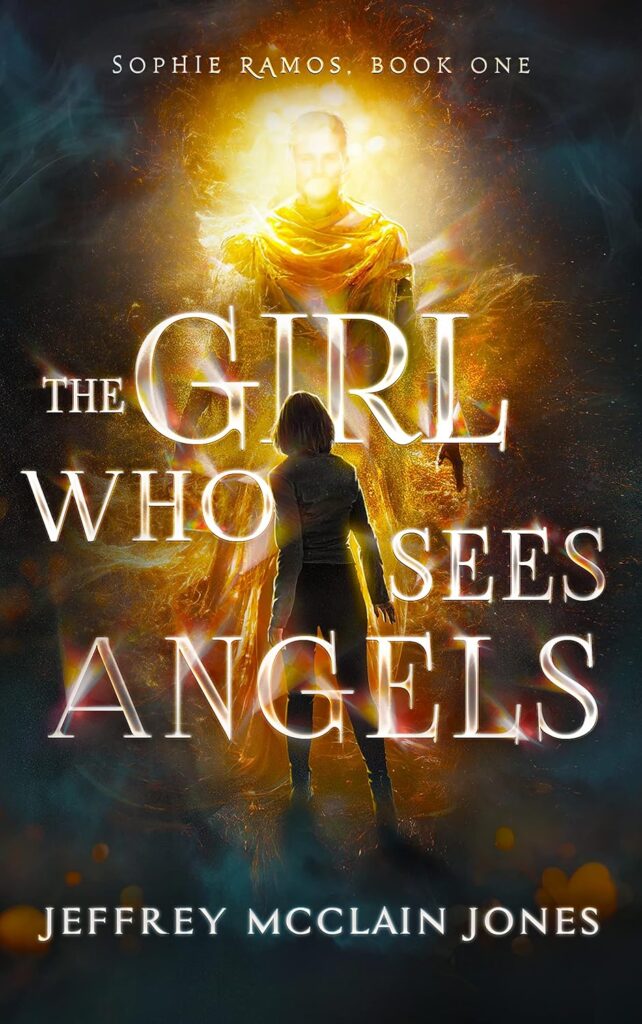
Have you ever wondered what it would be like to see beyond the physical world? To witness angels and spirits that others cannot perceive? Jeffrey McClain Jones explores this captivating premise in “The Girl Who Sees Angels,” the first book in the Sophie Ramos series, delivering a thought-provoking Christian supernatural thriller that challenges our understanding of spiritual gifts and mental health.
Key Takeaways
- Sophie Ramos possesses the ability to see angels and spirits, a gift misdiagnosed as mental illness throughout her life
- The novel explores the intersection of faith, supernatural gifts, and mental health with compassion and nuance
- Detta serves as Sophie’s mentor, teaching her to embrace and control her spiritual abilities
- The story combines elements of spiritual warfare with a character-driven narrative about self-acceptance
- Perfect for readers who enjoy Christian fiction with supernatural elements and strong character development
- The book balances dark spiritual encounters with themes of hope, purpose, and divine calling
What is The Girl Who Sees Angels About?
“The Girl Who Sees Angels” introduces us to Sophie Ramos, a woman who has spent her entire life seeing things others cannot perceive. From childhood, Sophie has witnessed lights in darkness, shadows in daylight, and spiritual beings that exist beyond the veil of ordinary human perception. Her extraordinary ability, however, has been anything but a blessing.
Throughout her youth, Sophie’s visions led to countless doctor visits, psychiatric evaluations, and even sessions with priests. Her own mother doubted her experiences, and medical professionals labeled her as mentally ill. Society’s response to her gift transformed what could have been an extraordinary ability into a source of shame, fear, and isolation.
The narrative takes a dramatic turn when Sophie encounters Detta, a mentor figure who recognizes Sophie’s abilities not as symptoms of mental illness but as genuine spiritual gifts. Detta becomes the catalyst for Sophie’s transformation, teaching her to understand, control, and ultimately embrace what she sees.
The Heart of Sophie’s Journey
At its core, this novel explores the tension between perceived mental illness and spiritual giftedness. Sophie’s story resonates because it addresses a profound question many people face: when does unconventional perception cross the line from psychiatric condition to spiritual awareness?
Jones crafts a world where the spiritual dimension operates parallel to our physical reality. In this realm, angelic beings and demonic spirits wage an ongoing battle for human souls, while most people remain completely unaware of the supernatural warfare surrounding them. Sophie exists at the intersection of these two worlds, able to perceive what others miss but struggling to find her place in either realm.
The relationship between Sophie and Detta forms the emotional backbone of the story. Detta serves as more than a teacher—she becomes the friend Sophie desperately needed, someone who believes in her when everyone else dismissed her experiences as delusions. Their bond illustrates the transformative power of validation and acceptance.
As Sophie’s journey unfolds, she learns to distinguish between benevolent and malevolent spiritual entities. She discovers that her gift carries responsibility and purpose. The novel depicts her evolution from a frightened woman hiding her abilities to someone who can use her perception to help others.
One particularly compelling aspect of the story involves Sophie confronting the threatening spirits that have plagued her, including a menacing ghoul that hovers above her bed at night. These encounters test both her newfound confidence and her developing spiritual understanding.
Why The Girl Who Sees Angels Resonates with Readers
Jones has created something unique in the Christian fiction landscape. Rather than dismissing supernatural perception as either purely psychological or entirely demonic, he presents a nuanced view where genuine spiritual gifts exist but require wisdom, mentorship, and faith to navigate properly.
The novel speaks to anyone who has ever felt different, misunderstood, or dismissed by authority figures who couldn’t comprehend their experiences. Sophie’s vindication—her discovery that she isn’t crazy but gifted—offers hope to readers who may feel similarly marginalized.
The story also addresses the importance of discernment in spiritual matters. Not every supernatural experience originates from a benevolent source, and Sophie must learn to differentiate between helpful angelic presences and dangerous demonic entities. This emphasis on spiritual discernment adds depth and practical wisdom to what could have been a simple fantasy narrative.
The pacing keeps readers engaged as Sophie encounters various spiritual challenges while navigating everyday relationships and work responsibilities. Jones grounds the supernatural elements in realistic daily life, making the extraordinary seem plausible and accessible.
Who Should Read This Book?
“The Girl Who Sees Angels” will particularly appeal to readers who enjoy Christian supernatural fiction, spiritual warfare narratives, and stories about characters discovering hidden abilities. Fans of Frank Peretti’s spiritual warfare novels or Ted Dekker’s supernatural thrillers will find familiar themes explored from a fresh perspective.
The book suits readers interested in exploring the intersection of faith and supernatural gifts. Those who appreciate character-driven narratives focused on personal growth and self-acceptance will connect with Sophie’s transformative journey.
While firmly rooted in Christian theology and worldview, the novel’s themes of finding validation, overcoming fear, and discovering purpose transcend specific religious boundaries. Anyone who has struggled with feeling different or misunderstood may find Sophie’s story meaningful.
The book works for both young adult and adult audiences, though the spiritual warfare elements and some darker supernatural encounters may be intense for younger readers. Parents should consider their teen’s maturity level and comfort with supernatural themes before recommending it.
The Bigger Picture: Faith, Fear, and Finding Purpose
Beyond its entertaining supernatural elements, “The Girl Who Sees Angels” tackles substantial themes about faith, identity, and purpose. Sophie’s journey mirrors the experience of many people of faith who struggle to understand their spiritual gifts or feel dismissed when their experiences don’t align with conventional religious expectations.
The novel suggests that spiritual gifts, while potentially isolating, ultimately serve a greater purpose. Sophie’s ability to see angels isn’t random or meaningless—it positions her to help others and engage in spiritual warfare. This framework provides meaning to experiences that once seemed like curses.
Jones also explores how fear can prevent people from embracing their true calling. Sophie’s initial terror of her visions kept her trapped in a limited existence. Only when she confronts her fears with Detta’s support can she step into her authentic identity and purpose.
The mentorship dynamic between Detta and Sophie highlights the importance of community and guidance in spiritual development. Sophie couldn’t navigate her gifts alone—she needed someone with wisdom and experience to help her understand what she was seeing and how to respond appropriately.
Final Thoughts on The Girl Who Sees Angels
Jeffrey McClain Jones has crafted an engaging first installment in the Sophie Ramos series that successfully blends supernatural suspense with themes of personal growth and spiritual discovery. While the premise of someone seeing angels isn’t new to Christian fiction, Jones approaches it with fresh sensitivity to issues of mental health and the importance of proper discernment.
The novel’s greatest strength lies in its compassionate portrayal of Sophie’s struggle. Rather than rushing to vindicate her, Jones allows readers to sit with her confusion, fear, and shame before her abilities are validated. This measured approach makes her eventual transformation more satisfying and earned.
“The Girl Who Sees Angels” sets up an intriguing series premise while telling a complete, satisfying story. Sophie’s character arc from self-doubt to confidence provides emotional resonance, while the supernatural elements deliver the suspense and intrigue readers expect from the genre.
For readers seeking Christian fiction that takes spiritual gifts seriously while acknowledging the complexity of distinguishing genuine supernatural experiences from mental health conditions, this novel offers a thoughtful exploration. It affirms that the spiritual realm is real, that some people may have extraordinary perception of it, and that such gifts require wisdom, faith, and community to navigate safely.
Whether you’re drawn to stories of spiritual warfare, character journeys of self-discovery, or simply appreciate well-crafted supernatural fiction rooted in Christian worldview, “The Girl Who Sees Angels” delivers a compelling narrative that will leave you eager to continue Sophie’s story in subsequent books.
The Girl Who Sees Angels Book Review: A Supernatural Journey of Faith and Self-Discovery
Have you ever wondered what it would be like to see beyond the physical world? To witness angels and spirits that others cannot perceive? Jeffrey McClain Jones explores this captivating premise in “The Girl Who Sees Angels,” the first book in the Sophie Ramos series, delivering a thought-provoking Christian supernatural thriller that challenges our understanding of spiritual gifts and mental health.
Key Takeaways
- Sophie Ramos possesses the ability to see angels and spirits, a gift misdiagnosed as mental illness throughout her life
- The novel explores the intersection of faith, supernatural gifts, and mental health with compassion and nuance
- Detta serves as Sophie’s mentor, teaching her to embrace and control her spiritual abilities
- The story combines elements of spiritual warfare with a character-driven narrative about self-acceptance
- Perfect for readers who enjoy Christian fiction with supernatural elements and strong character development
- The book balances dark spiritual encounters with themes of hope, purpose, and divine calling
What is The Girl Who Sees Angels About?
“The Girl Who Sees Angels” introduces us to Sophie Ramos, a woman who has spent her entire life seeing things others cannot perceive. From childhood, Sophie has witnessed lights in darkness, shadows in daylight, and spiritual beings that exist beyond the veil of ordinary human perception. Her extraordinary ability, however, has been anything but a blessing.
Throughout her youth, Sophie’s visions led to countless doctor visits, psychiatric evaluations, and even sessions with priests. Her own mother doubted her experiences, and medical professionals labeled her as mentally ill. Society’s response to her gift transformed what could have been an extraordinary ability into a source of shame, fear, and isolation.
The narrative takes a dramatic turn when Sophie encounters Detta, a mentor figure who recognizes Sophie’s abilities not as symptoms of mental illness but as genuine spiritual gifts. Detta becomes the catalyst for Sophie’s transformation, teaching her to understand, control, and ultimately embrace what she sees.
The Heart of Sophie’s Journey
At its core, this novel explores the tension between perceived mental illness and spiritual giftedness. Sophie’s story resonates because it addresses a profound question many people face: when does unconventional perception cross the line from psychiatric condition to spiritual awareness?
Jones crafts a world where the spiritual dimension operates parallel to our physical reality. In this realm, angelic beings and demonic spirits wage an ongoing battle for human souls, while most people remain completely unaware of the supernatural warfare surrounding them. Sophie exists at the intersection of these two worlds, able to perceive what others miss but struggling to find her place in either realm.
The relationship between Sophie and Detta forms the emotional backbone of the story. Detta serves as more than a teacher—she becomes the friend Sophie desperately needed, someone who believes in her when everyone else dismissed her experiences as delusions. Their bond illustrates the transformative power of validation and acceptance.
As Sophie’s journey unfolds, she learns to distinguish between benevolent and malevolent spiritual entities. She discovers that her gift carries responsibility and purpose. The novel depicts her evolution from a frightened woman hiding her abilities to someone who can use her perception to help others.
One particularly compelling aspect of the story involves Sophie confronting the threatening spirits that have plagued her, including a menacing ghoul that hovers above her bed at night. These encounters test both her newfound confidence and her developing spiritual understanding.
Why The Girl Who Sees Angels Resonates with Readers
Jones has created something unique in the Christian fiction landscape. Rather than dismissing supernatural perception as either purely psychological or entirely demonic, he presents a nuanced view where genuine spiritual gifts exist but require wisdom, mentorship, and faith to navigate properly.
The novel speaks to anyone who has ever felt different, misunderstood, or dismissed by authority figures who couldn’t comprehend their experiences. Sophie’s vindication—her discovery that she isn’t crazy but gifted—offers hope to readers who may feel similarly marginalized.
The story also addresses the importance of discernment in spiritual matters. Not every supernatural experience originates from a benevolent source, and Sophie must learn to differentiate between helpful angelic presences and dangerous demonic entities. This emphasis on spiritual discernment adds depth and practical wisdom to what could have been a simple fantasy narrative.
The pacing keeps readers engaged as Sophie encounters various spiritual challenges while navigating everyday relationships and work responsibilities. Jones grounds the supernatural elements in realistic daily life, making the extraordinary seem plausible and accessible.
Who Should Read This Book?
“The Girl Who Sees Angels” will particularly appeal to readers who enjoy Christian fiction with supernatural elements and spiritual warfare narratives. Those exploring faith-based literature will find this book offers a fresh perspective on divine gifts and spiritual perception.
The book suits readers interested in exploring the intersection of faith and supernatural gifts. Those who appreciate character-driven narratives focused on personal growth and self-acceptance will connect with Sophie’s transformative journey, making it an excellent addition to any reading list.
While firmly rooted in Christian theology and worldview, the novel’s themes of finding validation, overcoming fear, and discovering purpose transcend specific religious boundaries. Anyone who has struggled with feeling different or misunderstood may find Sophie’s story meaningful.
The book works for both young adult and adult audiences, though the spiritual warfare elements and some darker supernatural encounters may be intense for younger readers. Parents looking for books for teens should consider their child’s maturity level and comfort with supernatural themes before recommending it.
The Bigger Picture: Faith, Fear, and Finding Purpose
Beyond its entertaining supernatural elements, “The Girl Who Sees Angels” tackles substantial themes about faith, identity, and purpose. Sophie’s journey mirrors the experience of many people of faith who struggle to understand their spiritual gifts or feel dismissed when their experiences don’t align with conventional religious expectations.
The novel suggests that spiritual gifts, while potentially isolating, ultimately serve a greater purpose. Sophie’s ability to see angels isn’t random or meaningless—it positions her to help others and engage in spiritual warfare. This framework provides meaning to experiences that once seemed like curses.
Jones also explores how fear can prevent people from embracing their true calling. Sophie’s initial terror of her visions kept her trapped in a limited existence. Only when she confronts her fears with Detta’s support can she step into her authentic identity and purpose.
The mentorship dynamic between Detta and Sophie highlights the importance of community and guidance in spiritual development. Sophie couldn’t navigate her gifts alone—she needed someone with wisdom and experience to help her understand what she was seeing and how to respond appropriately.
Final Thoughts on The Girl Who Sees Angels
Jeffrey McClain Jones has crafted an engaging first installment in the Sophie Ramos series that successfully blends supernatural suspense with themes of personal growth and spiritual discovery. While the premise of someone seeing angels isn’t new to Christian fiction, Jones approaches it with fresh sensitivity to issues of mental health and the importance of proper discernment.
The novel’s greatest strength lies in its compassionate portrayal of Sophie’s struggle. Rather than rushing to vindicate her, Jones allows readers to sit with her confusion, fear, and shame before her abilities are validated. This measured approach makes her eventual transformation more satisfying and earned.
“The Girl Who Sees Angels” sets up an intriguing series premise while telling a complete, satisfying story. Sophie’s character arc from self-doubt to confidence provides emotional resonance, while the supernatural elements deliver the suspense and intrigue readers expect from the genre.
For readers seeking Christian fiction that takes spiritual gifts seriously while acknowledging the complexity of distinguishing genuine supernatural experiences from mental health conditions, this novel offers a thoughtful exploration. It affirms that the spiritual realm is real, that some people may have extraordinary perception of it, and that such gifts require wisdom, faith, and community to navigate safely.
Whether you’re drawn to stories of spiritual warfare, character journeys of self-discovery, or simply appreciate well-crafted supernatural fiction rooted in Christian worldview, “The Girl Who Sees Angels” delivers a compelling narrative that will leave you eager to continue Sophie’s story in subsequent books.
About the Author: Jeffrey McClain Jones
Jeffrey McClain Jones is a prolific Christian fiction author who has published over 30 books, including popular series like “Seeing Jesus,” “The Reign,” and “Anyone Who Believes.” Born and raised in Lincoln, Nebraska, Jones discovered his love for storytelling at an early age, listening to his grandmother read classic children’s tales and later finding refuge in his vivid imagination.
Jones attended Houghton College, where he majored in both creative writing and biblical studies. Despite his passion for fiction, he initially pursued a career in academia and nonfiction before transitioning to the tech industry in the 1990s, where he founded his own computer consulting firm.
His return to creative writing came in 2006 when a meditation on scripture transformed into his first novel, “And He Healed Them All.” This experience of bridging the gap between biblical accounts and rich narrative storytelling became the foundation of his writing career. Jones is known for his contemporary Christian fiction that explores supernatural themes, spiritual warfare, and the modern-day relevance of faith.
Now living in Vernon Hills, Illinois, with his wife who serves as his marketing director, Jones divides his time between writing, computer consulting, and sharing his message with readers worldwide. His works have garnered thousands of devoted readers on platforms like Amazon and Goodreads, with many fans eagerly requesting continuations of his various series. To learn more about inspirational Christian authors, visit our author spotlights.
Similar Reads You Might Enjoy
If you enjoyed “The Girl Who Sees Angels,” consider adding these titles to your reading list:
“This Present Darkness” by Frank Peretti – A groundbreaking spiritual warfare novel that depicts the unseen battle between angels and demons in a small town. Peretti’s work pioneered the Christian supernatural thriller genre and remains a must-read for fans of spiritual warfare fiction.
“The Circle Series” by Ted Dekker – Beginning with “Black,” this series blends reality with a parallel spiritual world where the battle between good and evil takes center stage. Dekker’s fast-paced storytelling and supernatural elements will appeal to Sophie Ramos fans.
“Angel Eyes” by Shannon Dittemore – This young adult series follows a teenager who inherits the ability to see into the spiritual realm. The themes of discovering supernatural gifts and navigating spiritual warfare closely mirror Sophie’s journey.
“Seeing Jesus” by Jeffrey McClain Jones – Another series by the same author that explores miraculous encounters and spiritual experiences. Readers who connected with Jones’s writing style will want to explore his most popular work.
“The Screwtape Letters” by C.S. Lewis – While different in format, Lewis’s classic explores spiritual warfare through the correspondence of demons. It offers profound insights into spiritual discernment that complement the themes in Sophie’s story.
For more recommendations, check out our curated list of best Kindle Unlimited books where you can discover hidden gems in Christian fiction and supernatural thrillers.
Frequently Asked Questions
Is “The Girl Who Sees Angels” based on a true story?
No, “The Girl Who Sees Angels” is a work of fiction. However, the themes of spiritual gifts and supernatural perception are drawn from biblical concepts and Christian theology. The author explores these ideas through Sophie’s fictional journey while grounding the story in authentic questions about faith and spiritual experiences.
Do I need to read the Sophie Ramos series in order?
Yes, it’s recommended to start with “The Girl Who Sees Angels” as the first book in the series. Sophie’s character development and understanding of her gifts build progressively throughout the series, and starting with book one provides essential context for her journey and relationships.
Is this book appropriate for young adults?
“The Girl Who Sees Angels” can be suitable for mature young adults, but parents should consider their teen’s comfort level with supernatural content and spiritual warfare themes. Some scenes involving demonic entities may be intense for younger or more sensitive readers. For age-appropriate recommendations, explore our guide to best books for teens.
How does this book address mental health and spiritual gifts?
The novel thoughtfully explores the tension between mental illness diagnoses and genuine spiritual gifts. Rather than dismissing either possibility, Jones presents Sophie’s struggle with validation and the importance of discernment. The story suggests that while mental health is real and important, so too are spiritual experiences that may be misunderstood by secular medicine.
Are there any graphic or disturbing scenes?
While the book contains descriptions of demonic entities and spiritual warfare, Jones doesn’t dwell on graphic violence or horror. The darker elements serve the story’s spiritual themes rather than providing shock value. Readers sensitive to supernatural horror should be aware of these elements but will find them handled with restraint.
What makes this different from other Christian supernatural fiction?
“The Girl Who Sees Angels” stands out for its compassionate treatment of Sophie’s isolation and misdiagnosis. Many spiritual warfare novels focus primarily on the battle between good and evil, but Jones centers the personal cost of having gifts that others don’t understand or believe in. The mentorship relationship and emphasis on proper spiritual discernment also add depth beyond typical genre offerings.
Will there be more books in the Sophie Ramos series?
Yes, “The Girl Who Sees Angels” is the first book in an ongoing series. Jeffrey McClain Jones has established a pattern of writing multiple books in his series based on reader demand, so fans can expect more of Sophie’s story as she continues to develop her abilities and face new spiritual challenges.