
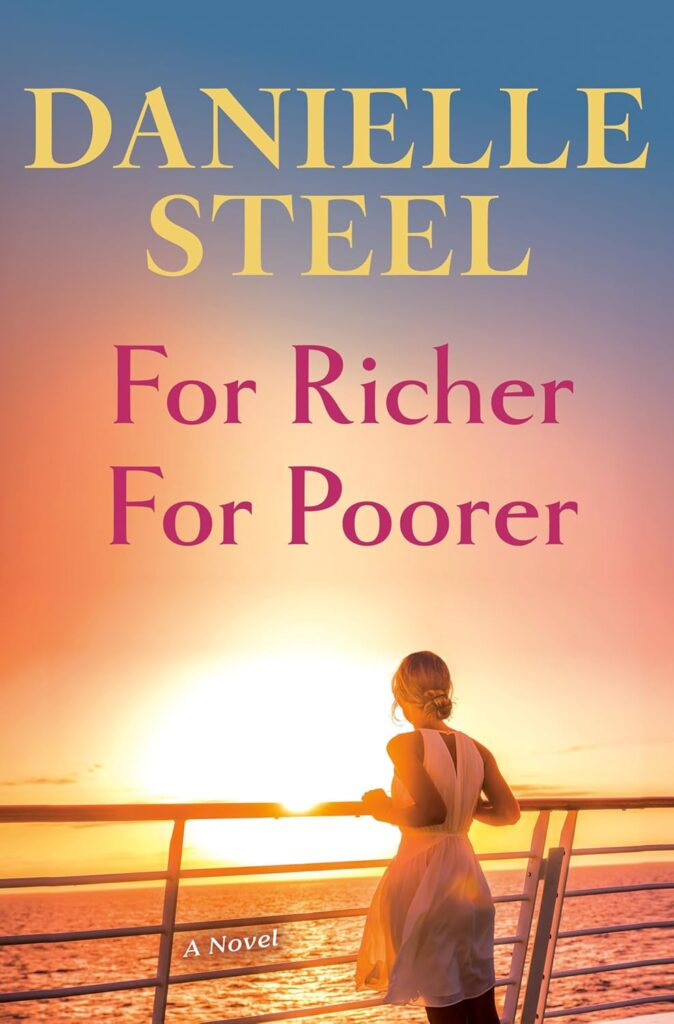
Bodies move through ruins, hungry for comfort. For Richer For Poorer, a novel by Danielle Steel, unfolds along the fault lines of family and business. Old wealth, tied to a once-famous fashion designer, cracks in tired hands while the world outside pulses in unrest. A daughter trades safety for longing. A patriarch holds kitchen knives with the same caution as banknotes.
Steel picks at what binds and severs us: blood, money, silence. She sets privilege against desperation. A daughter learns what love costs. Neighbors only hear shouting after midnight. Marriages falter under scrutiny from strangers and tabloids. Friends vanish after final drinks.
Early reviewers speak of tension that settles in the body. They call the prose sparse and sharp, suited for reading late at night with rain against the window. Some find hope in the small gestures, others close the book chilled by what remains unsaid. On Barnes & Noble, the first wave of readers calls it “a slow burn with a hard punch.” A handful on Amazon mark scenes that feel uncomfortably close—inheritance as a source of ruin, not rescue. Social threads on Facebook mention the book’s chill, its relentless focus on what cannot be fixed.
Steel’s latest divides opinion. Some praise its restraint, its quiet chronicling of collapse within a family and the business they built. Others want warmth, redemption, answers. The mood lingers. People leave the last page with a taste of ash, aware of what lingers after love is spent.
Table of Contents
Plot Overview and Main Themes
In For Richer For Poorer, the family estate—once a thriving business hub—crumbles, brick turning soft in the rain. Wealth seeps away, along with trust. The novel opens with a burst of noise—plates crash, a child hides in the dark. The silence that follows settles over everything. Here, pain mixes with wallpaper glue.
Money stains every life in this story. The main characters, including daughter Gloria and Patrick Hughes, live with gold-framed regrets and worn carpets underfoot. Each breakfast is an exercise in restraint, every evening a slow negotiation. Nothing is fixed, not old debts, broken promises, or impending divorce hearings. People dress for dinner to forget what gets thrown away.
Family Loyalties and Betrayals
At the center, the family’s loyalties tighten and snap. Fathers lose sons to distance, mothers lose daughters like Gloria to disapproval. Siblings turn polite, then cold, then distant. The ties once bound by business and blood fracture.
The line between love and obligation grows thin. Sometimes it vanishes. Dinner conversations scrape over the same wounds. No one wants to be first to leave, but everyone tries to disappear. The home once felt safe, now it swallows sound.
Key dynamics in the family:
- Inheritance divides more than it unites, especially over the prized beach house.
- Secrets traded for comfort, each one heavier than the last.
- Parental love measured only in what it costs.
The Corrosion of Wealth
Money breeds trouble in quiet ways. Old money loses its grip, and new money—like that of a real estate developer—brings shame. A salary slips out of reach, a fortune through fingers. In this world, gold is seldom pure, luck always comes with a catch. Past ties with an Italian prince hint at lost glamour but offer no refuge.
Characters weigh relationships against bank statements. Safety and affection become items you can buy or sell. The mansion, once a symbol of pride, grows hollow; windows rattle at night. No one can sleep. Generosity mutates into resentment and fear.
Main ways wealth shapes the story:
- Small kindnesses cost too much.
- Affection shown as gifts, later as debts.
- Family name as a burden, not a shield.
Love’s Bargain and Cost
Love grows sour beneath ceiling leaks and worn granite counters. Courtship and marriage become deals, not escapes. No fairy tales, no rescue. Characters ache for what they cannot have or cannot express—sometimes leading to divorce.
The protagonist trades safety for longing. They measure risk, knowing love’s price is steep. No one is innocent. Each person gives more than they expect to lose, then tries to claw it back.
Love’s currency flows:
- Romance dies in silence.
- Forgiveness is rare, withholding habitual.
- Small gestures try to fix what can’t be repaired.
The Public and Private Collapse
The family rarely grieves in peace. Gossip lingers around every fencepost. Socialites and neighbors turn away but watch from windows. Social events become stages for scrutiny. Tabloids get the story wrong, again and again, feeding the hunger for someone’s failure.
The family learns privacy costs most of all. Every secret finds light. Appearances matter but only until midnight. After that, truth sharpens its teeth.
Public scrutiny invades:
- Friends vanish as fortunes shift.
- Scandal outlasts any apology.
- Shame changes the shape of every room.
For those seeking insight on how money, silence, and public opinion pressure shape families, critic Maureen Corrigan highlights similar family unravelings in contemporary fiction. If you’re interested in how novels grapple with the slow erosion of love and resources, Publishers Weekly’s review of Danielle Steel’s new work offers a different perspective.
For Richer For Poorer rests on these themes. Wealth fades, love fails, and family fractures—whether over broken business fortunes, painful divorce, or lost summer vacations at the beach house. The story lingers in absences—in what no one says, in what remains after everything good is spent.
Eugenia Ward: A Complex Protagonist
Eugenia Ward stands at the bleak center of For Richer For Poorer: A Novel. Her presence shapes the quiet despair that permeates the story. As a former fashion designer known for her exquisite wedding gowns and evening gowns, Eugenia is not a symbol—she is flesh, bone, and regret. Steel gives her no easy out, no grand speech. Instead, Eugenia walks narrow halls, her hands cold and careful. Money echoes in her voice, but so does hunger. The house doesn’t love her back. Each room remembers something she tried to forget.
Stillness and Tension
Eugenia Ward’s movements are spare, stripped of excess. She folds napkins after dinner, lines each corner straight. Her restraint is a form of survival. Threads of control. When she speaks, the words fall flat, heavy. She asks for peace but expects none. There is a tightness around her life—caused by inheritance, secrecy, and pride.
- She closes doors quietly so no one wakes.
- Presses old dresses to her skin, searching for warmth left behind.
- Watches the rain run down cracked glass, counting each drop.
She is not glamorous. She is not tragic. She is a woman learning to become small in her own home. Her silence screams, as loud as breaking china.
Family Without Comfort
Eugenia Ward’s family watches her as both anchor and threat. She carries history in her shoulders. Her care feels clinical, precise. Still, her relationships with her daughter Gloria and with Patrick Hughes are marked by distance and unspoken tension. The love here is cold, doled out in small supplies.
In the kitchen, Eugenia listens for footsteps. Wonders if anyone will join her for tea. She counts spoons, measures sugar, waits for someone to reach out. They rarely do. Suspicion sits between them, year after year, unspoken but always present.
Steel writes Eugenia with the kind of grief that never finds release. No matter how many times she dusts the mantle, the dust returns. She cannot outrun the family name, or the sharp memories locked in the woodwork.
Impossible Choices
Eugenia Ward’s story is not of triumph, but survival through attrition. She strips herself down to what’s necessary. Each choice is both protection and punishment. No one sees the full cost but her.
In the key moments, she gives—just enough to keep everyone close, never enough to feel safe herself. Her sacrifices leave scars. Reviewers at Barnes & Noble describe Eugenia as “unyielding, shaped by losses she cannot admit.” Readers on Goodreads note her “invisible suffering, the way she grieves in silence, never asking forgiveness.”
Steel slashes away coats of sentiment to leave raw feeling. Eugenia endures, because that is all there is left to do. Her attempts at connection are brief, brittle. She becomes a witness to her own undoing.
Reviews Highlighting Eugenia’s Depth
Critics have noticed Steel’s refusal to soften Eugenia Ward’s edges. Several early readers on Amazon call her “stubborn,” “fearless,” and “far too human to be comfortable.” Others are unsettled by the narrowness of her hopes. Reviewers write about how Steel’s spare style in this novel makes Eugenia’s pain unavoidable. There’s no melodrama, just the slow grind of responsibility, regret, and the burden of being needed but not wanted.
Many describe Eugenia Ward as a haunting figure, the sort who lingers after the book is closed. She does not inspire pity, only recognition. She is the hard truth at the story’s core, a lens through which all other family secrets are magnified.
For Richer For Poorer: A Novel shows her strength not as boldness, but as the ability to bear. Steel pulls no punches. Eugenia’s character is as unyielding as winter soil. When the money runs out, she stays. When love vanishes, she remembers and endures.
Societal Change and the Fashion Industry
Society bends and twists. So does the business of dressing it. In For Richer For Poorer: A Novel, economic decline spreads like damp through the walls. The haute couture fashion business, once a mark of class and elegance rivaling Oscar de la Renta’s finest, turns desperate and raw. Families try to hold onto old ways—especially the production of evening gowns and wedding gowns—but wake each morning to new rules shaped by a harsh business downturn and the lingering effects of the pandemic. Pride shrinks. Style is cut to the bone. Danielle Steel writes these shifts without pity, letting the silence throb between ruined silks and empty cupboards.
Financial Instability and Adaptation
Money leaves the house in slow withdrawals. The fashion business, rooted in haute couture traditions, becomes a harsh lesson in cutting losses and embracing ready-to-wear adaptations. Showrooms that once showcased breathtaking evening gowns and wedding gowns at New York Fashion Week are now hollowed out. Samples are recycled. Models are paid in favors and leftover inventory. Each month is a negotiation with fear. The firm faces cash shortfalls, missed payments, and the constant threat of closing for good.
The characters navigate mounting business challenges with basic tactics:
- Selling unused fabrics for pennies.
- Closing the least profitable ready-to-wear lines.
- Begging loyal clients to stay a little longer.
- Reaching out to wealthy acquaintances (sometimes enemies) for cash infusions.
No one is heroic. Decisions come late, weighed down by habit and shame. Managers fire friends, hoping to keep the business afloat another week. The family, including the daughter Gloria, takes meetings with people who once snubbed them at parties. Dignity ebbs. Old confidences are traded for bare survival.
Steel’s account mirrors many real-world stories in the fashion world, where rising costs, shrinking demand, and tough buyers create relentless pressure. Even brands with legacies like Oscar de la Renta feel the threat of obsolescence. Reviews note how clearly these realities shape the mood of the novel. Critics at Vogue track similar patterns of adaptation and loss in the actual fashion industry, echoing Steel’s focus on what must be given up.
Desperation runs through silk and thread, just as it does cash flow. Meeting potential investors to save the evening gown and wedding gown lines breaks pride. Each new partner demands more control, less pay, and faster returns. Business survival here is not about genius—it’s about outlasting, thinning out until only the essential haute couture and ready-to-wear remains.
Family, Resilience and Emotional Strength
Steel places survival in the front hall. Beyond money, her characters cling to each other, or what’s left. Family is both anchor and ankle weight. Resilience is not triumphant. It is washed out, slow—a kind of holding on. Steel’s sentences move like footsteps in a cold house. Sometimes, it is enough just not to fall.
Small supports matter most:
- Quiet comfort during nights of panic.
- Sharing meals even when food is short.
- Holding memories of better days—not as hope, but as warning.
No speeches. No grand reconciliations. The book finds strength in small actions—a hand on a shoulder, an old threadbare scarf passed down. Readers see the toll on bodies and tempers. People snap at each other, then help anyway. Emotions sour, then soften. The family’s persistence is not glory. It is duty. It is the only option.
Steel draws her characters with restraint. No rescue arrives. They learn to live with less—love, comfort, peace. For deeper looks at how memoir and fiction capture this kind of family grit, I recommend the Glass Castle by Jeannette Walls review. The pressure to endure never lets up; the story chills.
Critics find grace in these strained connections. Readers call the family “worn thin but unbroken.” The pain feels real, never staged. A sense of quiet exhaustion fills every room and every page. Emotional support looks like silence, patience, and sometimes just sharing space while the world tilts outside.
Old patterns break, some for good, most just shift slightly. Loss settles like dust. Every relationship is cut and stitched until it almost fits. Steel gives no relief, only the stubbornness to keep moving forward—meal by meal, thread by thread.
Those seeking more on how fiction handles these tensions across generations might turn to the Wild Dark Shore novel review for another portrait of family under siege. The comparison stings—in both stories, resilience is not the absence of pain, but the act of bearing it.
Reception and Cultural Relevance
“For Richer For Poorer: A Novel” landed with a cold certainty. Its arrival split opinion, left readers restless. Some recognized their own family inside the silence of its pages. Others dismissed the story as too harsh—no comfort, no redemption, just the thud of loss and resentment. The book moved through review circles and reader threads, collecting shadows.
Early Reviews and Reader Reactions
Within days, readers marked key scenes. On Amazon, many called the writing “disciplined and bruised,” refusing softness. Common ground emerged around the emptiness felt after the final chapter. Repeated praise for the tight prose. Less for the lack of comfort.
- “I closed the book colder than I began.”
- “A mirror, but the glass is cracked.”
- “Family pain that never wears out.”
Barnes & Noble’s early community shared a similar chill. Positive remarks centered on the conviction of Steel’s storytelling. No wasted words, no false hope. Readers isolated lines, wrote them on scraps. Short, jagged, true.
- “Each sentence like a stone skipping over grief.”
- “No melodrama, just endurance.”
- “Not a book to lend; it’s a wound.”
The reception is not universal praise. On Target’s product page, criticism seeps in. Some reject the story’s sharpness. Too somber. Too little love, too much cost. Still, the book lingers, draws second and third readings. Even the disappointed cannot look away. The discomfort sticks.
Critical Reception: Media and Literary Voices
Professional reviews echo the public voice. Critics dissect Eugenia’s character. Cold but magnetic. Family decay detailed without panic. A few urge readers to seek lighter fare, cautioning that hope here is missing or buried deep. Others call “For Richer For Poorer: A Novel” the sharpest release in Steel’s recent catalog.
- Publishers praise the restraint. A willingness to let characters fail in silence, not spectacle.
- Some reviewers admit fatigue. The absence of comfort weighs on them, page by page.
- Book blogs analyze the prose. Claim the style matches the mood: lean, stripped bare, unyielding.
Comparisons arise. Steel’s novel is set beside cold-family stories. Critics cite echoes of bleak inheritance tales, even the dry heartbreak of “American Pastoral” or the inescapable sorrow of late-modern domestic fiction.
Cultural Touchstones and the Novel’s Place
The novel pressed into a scar left by recent years. Economic collapse, lost wealth, families turned loose from their anchors and once-famed socialites. The setting reflects current anxieties—homes forgotten, fortunes erased, love gone thin and tired. Readers sense their own stories in the lines, as well as the public perception shaped by past social events surrounding the family’s downfall.
- Wealth as erosion, not shelter.
- Love not as cure, but as debt.
- Collapse both private and public.
This book is not a comfort read. Instead, it sits on nightstands with a kind of gravity. Shared in social media book clubs, discussed in threads that avoid easy answers. Readers seeking more uplifting fare quickly warn others. Fans of the unsettling—those who appreciate hard family stories or want their reading to leave a mark—stay longer.
The reach is wide. Readers across classes connect to the gnawing sense of not enough. The cultural conversation grows, especially among those interested in how modern fiction mirrors the cracks in daily life.
“For Richer For Poorer: A Novel” doesn’t disappear after the last page. It doesn’t fade. Its reception is marked by debate—about style, about pain, about whether fiction should comfort or confront. The novel takes up space, sharp and spare, in the talk around books that matter.
About the Author: Danielle Steel
Danielle Steel writes like someone who understands the fault lines beneath comfort. Her stories hold silence and aftermath. Few novelists have put as many pages between love and loss as she has. Author of For Richer For Poorer: A Novel, Steel stands as a fixture in modern fiction, shaping how millions see the cost of devotion and the ruin that follows excess.
Life and Personal History
Steel was born in New York in 1947. Her life split early—parents separated, then Paris, then San Francisco. She moved between languages, cities, losses. Later, Steel would call these places home. The luxury of one, the cold dignity of the other, show up in her fiction. She raised nine children. Some survived, some did not. Grief edged her stories on both sides.
- New York for childhood, strict rules, French tutors
- Paris for glamour, distance, roots still pulling
- San Francisco for work, family, storms of her own
What she learned in these cities fills her books with high windows and long shadows. She lost a son to tragedy. She rarely writes about herself directly, but absence weighs on her voice. Small sorrow, big rooms.
For more on Steel’s life, the article at Britannica lays plain the major facts behind her fiction.
Record-Breaking Success and Influence
Steel’s writing business is legendary. With a desk in the dark and typewriter keys clicking, she produces pages relentlessly—over 190 books to date. This prolific writing career has made her a #1 New York Times bestseller time and again, selling more than 800 million copies worldwide. Her literary business is both a marvel and a warning—each novel charts its own landscape of grief and gilded misery. Readers return for the wounds as much as the hope. While she writes romance, she resists easy bliss.
Her catalogue spans beyond romance into family drama, thrillers, and children’s books. Critics often separate her from literary peers, but her business success and wide readership speak volumes. For a detailed rundown of her achievements and challenges, her official biography offers more: About Danielle Steel.
A few defining marks of her career:
- Most translated author alive
- Longest streak on the New York Times Best Seller list
- Novels adapted to TV and film, recognized faces and broken homes
Writing Style and Literary Approach
Steel’s style is spare, almost clinical. Heavy on repetition, light on sentiment. Short, urgent sentences. Long pauses. Ordinary words crack open grief and longing. Some call it formulaic. Others say it strips love to the bone. She leaves room for what she does not say.
In For Richer For Poorer: A Novel, the minimalism is at its sharpest. Steel distills emotion—sometimes brutal, sometimes distant, never ornamental. Places and objects become stand-ins for unspoken feelings. Her best work refuses comfort. Characters do not heal; they endure.
For a deeper look at Steel’s impact on modern fiction, see the summary at Wikipedia. Literary critics argue over her worth, but readers do not. They fill threads, review sections, and social pages with stories of how her books mirror their own pain.
Resilience and Reputation
Steel is no stranger to scrutiny. The literary world is not always kind. Her prose faces ridicule for economy, her success for sheer volume. Yet Steel persists. She answers noise with another novel, another family suffering beautifully. Emotional clarity marks her fiction. She gives no answers, only endurance.
Her appeal is wide but deep with those who find themselves in the cold rooms she writes. Wealth, loss, survival—these are her currency. Her influence trails behind her publishing business, leaking quietly into how people tell stories about love that doesn’t save and money that rots foundations.
Steel’s novels stay with readers who fear soft fiction. In For Richer For Poorer: A Novel, her longtime practice reaches a colder edge. Success, for her, lives not in comfort but in the willingness to write through the worst and leave silence for what remains.
Conclusion
For Richer For Poorer tells a novel story that strips comfort from its pages and leaves only what matters. The prose is cold, sharp, nothing wasted. Families fracture under the weight of inheritance, love, and old resentments. Money and business offer no rescue. The characters wear their losses, each gesture unfinished. Reviews stay consistent: harsh, clear, and unforgettable. Readers describe it as “a slow burn with a hard punch” on Barnes & Noble; others feel unsettled by its stark truths, as seen in Amazon and Goodreads. Critics at Publishers Weekly highlight the novel’s refusal to offer sentiment, calling it one of Steel’s most disciplined works.
These details matter for anyone drawn to character-driven stories set against the rot of old privilege and the hard edge of societal change. Lessons of survival echo through each chapter. Resilience and adaptation become daily routines, small and unremarkable, but necessary. The public and private costs feel current, reflecting struggles faced beyond the novel’s pages.
For more on how fiction handles trauma, survival, and stubborn bonds in failing families, see the Anxious People by Fredrik Backman review or explore the Top recommended books list. These links offer a broader view of storytelling that lingers in silence and aftermath.
For Richer For Poorer is not a release from grief. It is a witness to it. Grateful for anyone who reads this far. I leave with a single line from the book: “Nothing left to give but presence.” If the silence hurts, it’s doing its job.