
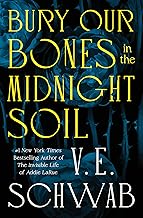
The night air, faint with rain, pressed against the pane. I remember the first time I saw the words: Bury Our Bones in Midnight Soil. Candlelight trembling across my sheets, the title heavy in my chest. I could not look away. The phrase told me everything—a warning, a promise, something feral curled in the dark.
V.E. Schwab set this story adrift across five centuries. Each page thick with old secrets, sharp hunger, the low hum of centuries buried but not gone. Bodies move through cold chapels, city alleys, damp American dorms. Women lost and remade, burning for survival. Vampires, yes, but nothing sweet. Mostly fury. Sometimes hope.
Bury Our Bones in Midnight Soil caught me because I look for stories where immortality feels like confession. Where longing carves itself into every hour, stubborn and quiet, refusing to heal. Queer love threads through the silence, raw and bright beneath the ache of time. Each moment layered in history, every sentence cut close to the bone.
I read, breathing slow, shadows folding in around my bed. No easy answers. Only the press of desire, the certainty that some things will always haunt.
Unraveling the Plot Across Time
Three lifetimes. Centuries pile up like wet leaves, stained and silent. In Bury Our Bones in Midnight Soil, the stories of María, Sabine, and Alice bleed together across five hundred years. Nothing comes easy. Time sketches their hunger onto brick, wood, skin. The world moves but pain lingers, like the smell of blood in old stone.
María, 1532: Firelight and Shadows
María’s story starts in 1532. Stone rooms thick with incense, a flicker of chapel candle. She is young but burdened. The rules are hard and cold. Meeting Sabine pulls her into a world she cannot leave behind. Sabine is healer, widow, and something else. The first taste of immortality is sharp and full of guilt, like winter pressing under the door. Hunger stirs. María learns to hide what she becomes. Fire is her enemy. Sunlight sharp on her skin—she cannot risk it. The past never lets go.
Sabine, 1800s: Hunger Beneath the Surface
Sabine stands in the century of gaslight and alleys. London thick with fog and secrets. She is fierce, careful, always looking for the next place to disappear. She remembers María. The hunger between them was worship and punishment all at once. Sabine shapes her own world from shadows, touching cruelty and longing in each choice. Burying bones in midnight soil is their way to begin again, a small prayer whispered to dirt and night. It is secrecy. It is hope with its teeth bared. Graveyards are never safe for her—something deep in her blood recoils at consecrated ground.
Alice, 2019: Modern Ash and Bone
Alice. Born and buried in the same breath, 2019. She does not want immortality but wears it like a fresh wound. American campus, rain on brick, nothing feels real. She is caught in the echoes of María and Sabine, carrying the sorrow of other centuries. Alice tries to hide, but hunger always shows. She fears sunlight, runs from flame. Everything fragile, even the bodies she leaves behind. Her life roots into midnight soil as others did before, secret and raw.
Dual Timelines, Rituals, and Yearning
Schwab builds each timeline with patience. Where one life falters, another begins. The book bends rules, cuts between the past and the present until they seem stacked in the same dark room. Burying bones in midnight soil is a ritual—rebirth and secrecy, memory and hiding. Each woman digs at midnight, hands full of hurt and new beginnings. Old and new grief locked in the ground.
Suspense grows with every forbidden touch, each choice hidden from daylight. There are moments when the past rushes up to choke the present. I was gripped by how the past echoed into the present—how María’s fear threads into Alice’s loneliness, how Sabine’s rage salts the ground of every new century. The story never lets you settle. It demands you watch how hunger, love, and what they bury keep coming back.
Vampire rules stay sharp and simple: fire burns, sunlight kills, graveyards are danger. Secrecy matters more than anything. Most wounds don’t heal, not really. Schwab keeps the story lean but heavy, every chapter breaking open a new secret.
For more on how the novel’s dual timelines reflect longing and rage through each era, you can find an in-depth review at Goodreads. The sense of suspense—of centuries pressing together—never fades. The adventure is gritty, breathless. Pages drag you forward like teeth in the dark.
Exploring Themes of Hunger and Immortality
In bury our bones in midnight soil, hunger is never just hunger. It sits deep. Not always for blood. Sometimes for a hand in the dark, for a voice that says your name, for freedom when the world’s doors are locked. Hunger like a hollow you fill with old stories and broken glass, still hoping to find something soft inside.
Hunger: More Than Blood
It pulls. Teeth ask for flesh. But the ache goes silent when full, so it never fades. María, Sabine, Alice—they carry want like a knife in the side. Love shows up as need, sharp and constant. It’s hunger for touch, for safety, for the freedom to be seen. They want to belong, to escape old skins.
This theme hit me hard because it mirrors real struggles with wanting more from life—more care, more space, more kindness—always just out of reach. The hunger never leaves, only changes shape. Even when bodies are fed, the soul finds new ways to starve.
In many ways, this reminds me of how sapphic desire in the story is written—as necessity, hidden but strong. Always pressing underneath what’s allowed.
Immortality: The Cost of Never Ending
To live forever means to lose almost everything. The years stretch out, cold and patient. Friends blur into memory. Kindness dries up. Rage settles in your gut where hope used to bloom. Immortality here is not glamour. It’s weight. Each day, another layer of loneliness.
I felt the toll of it—the slow grind of decades, centuries, whole lives swept behind. They fight to remember what it meant to want, not just survive. This hurts most at night. Silence builds. Faces of those left behind twist into ghosts.
Symbols: Roses and Teeth
Roses in this book mean more than beauty. Petals soft as a kiss, but thorns dig deep. Danger and want, all tangled together.
Teeth show up in every glance, every threat. Power kept close, always waiting for the moment it will be needed.
The symbols sharpen the themes: beauty hides cruelty, survival means teeth bared in the dark.
Queer Longing and the Weight of Rules
Desire in bury our bones in midnight soil wears many faces. Love between women burns under centuries of rules—always hidden, always alive. Their hunger is a kind of rebellion. To want is to fight.
Across time, they move through locked doors, heavy with fear. The world looks at them with suspicion. They keep secrets, wear new names, trade sunlight for shadows.
I saw myself in these struggles. The ache for self, for love, for a life not hemmed in by the world’s smallness.
For another look at these themes, this review on The Nerd Daily speaks about hunger as an aching void that shapes every choice.
Character Journeys and What Makes Them Unforgettable
What held me in bury our bones in midnight soil were the girls who refuse to disappear. María, Sabine, Alice. Each marked by loss, shaped by the century that tried to break them. The hunger in their veins, quiet some days, wild on others. I followed their steps from chapel shadow to city dusk to the blind ache of a modern campus. Never felt safe. Every choice sharp-edged.
María: Forbidden Closeness
María moved soft through stone corridors, carrying shame like a lantern. I saw how she pressed her longing into the dark, careful, hopeful. The rules were tight. Her first moments with Sabine burned slow, quick—intimacy forced into corners, swallowed when the sun rose. She shaped herself around fear. Still, she reached for warmth where she could. María never felt false. Her need was clumsy, honest, hard to watch. Sometimes I wanted to turn away. That is why she stayed with me.
Sabine: Darkness That Feeds
Sabine. All shadow and sharp smile. I loved her for the ways she claimed power, held it close. She hurt others and did not hide it. At times, she used love to wound. I saw how her years weighed down her voice, how control felt like the only truth. Sabine’s freedom was messy, intoxicating. She took what she wanted. Sometimes that meant breaking trust, cutting tie after tie. It was selfish. It made her real. I could not look away.
Alice: Modern Rage, Broken by History
Alice’s anger, new and shining, moved quick through empty rooms. I connected with Alice’s story because it felt so current. She struggled against her own reflection. Kept her scars hidden. Tried to be normal, but history would not let go. Her loneliness tasted like metal. She broke rules just to feel alive. Some days, I saw myself in her choices—reckless, desperate, raw. The world outside pressed in, and her hunger turned to rage. Alice was not gentle. That is what pulled me toward her.
bury our bones in midnight soil thrives in these broken, selfish, beautiful characters. Their choices cut deep. Their pain lingers. When I think about what makes these journeys unforgettable, it is the way they refuse to heal quietly. For an in-depth look at these characters, the New York Times book review explores how their wounds and desires keep the story alive. Grief, rage, desire—never left in the past. Each woman drags her darkness forward. That, I cannot forget.
Why Bury Our Bones in Midnight Soil Deserves a Spot on Your Shelf
Pages smell like ash, rain, old dust. Schwab’s writing stays near the skin. Sparse, clear, thick with memory. I read each page in silence. Clothes heavy with fog, hands cold, mouth dry. Bury Our Bones in Midnight Soil does not waste time. It presses forward, word by word, until everything shakes.
Schwab’s Sensory Writing
Details live here, raw and bright. The chill of stone, copper tang of blood, roses cut from wet earth. Rooms thick with candle smoke. Each sense under a pale light, ordinary things gone strange. Schwab never overwrites. She cuts, pares back. Only what matters remains. I trace each image, feel each bruise. The world is bleak, but I stay.
Emotional Weight and Queer Vampire Hunger
Loneliness carves its own space. Hunger circles every night. These are vampires twisted by more than time. Not just desire for flesh, but for closeness, safety, somewhere to bury loss. Sapphic love shivers just beneath the lines. Love is not neat, not easy. Every moment hard, fraught, necessary. I see old rules, heartbreak collected like dried petals in a box.
Fantasy readers who crave something colder, sharper, will find a home here. Schwab does not glamorize the dark. The urge to belong, to survive, is always honest, never soft. After finishing, I felt changed by its haunting message.
A Place in the Shades of Magic World
You do not need to know her other stories. Still, shadows join quietly at the edges. Magic is here, quiet, thin as a whisper. Painful histories, hunger for more. This novel stands alone, but leaves you wanting to learn the shape of Schwab’s larger world. For those who want to linger, the Goodreads page for Bury Our Bones in Midnight Soil catalogues the sweep of her work. Familiar in its darkness. Still, nothing repeated.
My Takeaway: Embracing the Dark
I turn away from the mirror. See hunger in my own eyes. Teeth on my tongue. Schwab reminds me not to hide from myself. Desire hurts. So does memory. Still, I press on. Learn to live with sharpness. Let the ache stay. The dark does not always take.
If You Want More
Try Carmilla. Or The Gilda Stories. Older, queer, tired of soft light. For another kind of chill, slip into the New York Times review to sort out what lingers after midnight. This book fits next to them, cold but honest. Your shelf should make room.
Pick up Bury Our Bones in Midnight Soil. Let it bruise you. Sink teeth until blood wells up. You will not forget.
Conclusion
Bury Our Bones in Midnight Soil leaves scars I still touch. Old grief, hunger, and a fierce kind of hope. Stories stacked on secrets, love pressed beneath centuries. The cold, the longing, the sharp edge of desire—they stay with me.
History clings to every word. Horror sits quiet, patient in the dark. There is heart inside even the worst moments, a raw human ache that does not fade. I finish the last page and feel the weight in my chest, the ache of secrets not yet buried.
I hope others find themselves drawn in, too. That you carry something raw from these pages. Immortality gives and wounds at once. What we bury, what survives, never truly settles. Some stories stay, haunting, hands gripping midnight soil.