
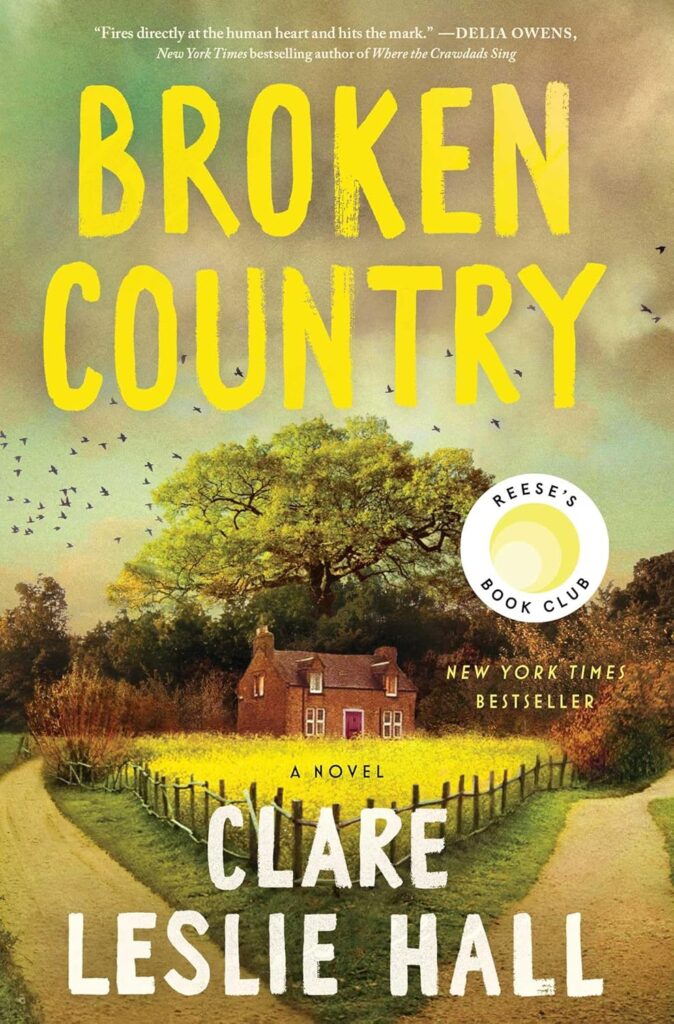
To begin this Broken Country by Clare Leslie Hall review is to step quietly into the complexity of a novel marked by loss and longing, where each choice carves a new channel through the landscape of the heart. The author, celebrated for her clear-eyed story craft, brings contemporary fiction’s most pressing questions—how we grieve, how we love, how we endure—into sharp focus within the confines of a rural English village trembling with secrets. This family drama has captured the attention of readers for its layered dual timeline, simmering mystery, and the understated grace of its prose.
As I reflect on Broken Country, I find the novel’s structure—a braid of past and present, sorrow and hope—mirrors the way memory tugs at us just when we think we know our way forward. For readers drawn to fiction that balances profound depth with an honest look at fractured relationships and a heartbreaking love triangle, this review aims to offer a clear, unvarnished perspective. Here, I’ll trace how the author’s narrative intertwines lyrical storytelling with raw human truth, setting the stage for a story that leaves its mark long after the final page.
Table of Contents
About Clare Leslie Hall and the Inspiration Behind Broken Country
To understand Broken Country is to feel the quiet presence of the author and the unsparing, measured truth embedded in her prose. Hall writes with steady clarity, selecting details that carry weight and silences that speak louder than words. Each story she shares emerges from her careful observations, a patient tending of memory and place, and a willingness to confront both grief and hope with equal honesty. Her voice, though never loud, lifts the veil on lives lived within a farming community marked by quiet struggle, where every heartbreak is balanced by a moment of subtle grace.
Clare Leslie Hall: A Writer Rooted in Experience
Hall’s background is woven deeply into the slow burn of each chapter. She has long observed how small towns shape their residents and how absence reverberates through generations. Growing up in rural England, surrounded by fields divided by old stone walls and changing seasons, she developed an eye for settings that become characters in their own right. Though formally trained in literature, it is Hall’s lived experience—that intimate grasp of everyday textures—that compels her to write with such clear-eyed empathy.
Her family history, filled with migration and change, threads through her fiction as recurring patterns. Hall often reflects on the lessons nature imparts—slow growth, sudden storms, and the patience required to endure. She recalls long hours spent watching shadows through a window, allowing the quiet moments to inspire her next line. Rather than rushing, each of her novels unfolds like a steady walk through a clearing fog.
The Spark That Lit Broken Country
The genesis of Broken Country came during a time of personal upheaval, a tragedy that left Hall wrestling with the absence of a close friend. Turning to prose as a form of contemplation, she quietly explored how a single void could divide a family or unmoor a village. Her novel’s rural setting grew from landscapes she once called home—fields bounded by old stone walls and fences that both protect and confine—mirroring the complex interplay of belonging and isolation.
Hall’s intent was not to craft a sweeping epic, but rather to uncover the subtle shifts wrought by quieter forces: unspoken burdens, neglected promises, and the lingering aftermath of choices made in haste. Drawing inspiration from writers like Kent Haruf and Alice Munro, who reveal how the mundane is charged with meaning, Hall sought to build a world where readers could recognize their own stories reflected in the disappointments and small victories of her characters.
Motivations and Creative Process
Hall’s creative process unfolds thoughtfully and deliberately. She gathers stories through listening, allowing the rhythms of real conversation to shape her dialogue. Habitually walking the edges of old villages, sketching buildings, trees, and landscape details as she goes, this practice anchors Broken Country in a tangible sense of place—each scene grounded by physical presence, every emotion tied to something concrete, like a worn jacket or the thin glass of a window.
Prose became, for Hall, a way to bring stillness sharply into focus. Her aim was to reveal how wounds linger beneath the surface of everyday interactions. The novel’s dual timelines emerged naturally, illustrating how past and present entwine like shadows over fresh grass. This delicate tension between memory and the urge to move forward lies at the heart of the story’s core.
An underlying theme running through Broken Country is a first love complicated by a love triangle—a catalyst that ignited the novel’s plot. Early influences on Hall’s inspiration include the intertwined lives of Beth, Frank, and Gabriel, whose formative experiences shaped much of the emotional landscape she explores.
The Weight of Small Choices
For the author, inspiration comes from ordinary decisions—the subtle trade-offs made daily. She structures her fiction around choices that may seem slight—a decision to remain silent, a different path taken across a field—but that resonate for years afterward. Hall is far more intrigued by the slow fallout of these moments than by sudden twists; to her, real lives are transformed by small, nearly invisible acts.
In crafting Broken Country, Hall traced the echoes of these choices, inviting readers to walk the same worn paths her characters tread. This approach firmly grounds the novel in reality while quietly holding onto the hope of change tucked into its margins.
For readers drawn to fiction that unflinchingly explores both despair and endurance, Broken Country stands as a poignant love story, bearing witness to loss and renewal in equal measure. The author’s patience and attentiveness open a window where light filters in, page by quiet page.
To grasp this novel’s wider significance, consider exploring how grief and recovery unfold in other contemporary works, as discussed in this review of rural English novels. This connection enriches an appreciation of Hall’s work, situating it among stories that acknowledge the enduring ripple effects of personal and communal change.
Plot Overview: What to Expect in Broken Country
Stepping into Broken Country feels like entering a house where every window frames a different season. This story builds its emotional depth through ordinary moments—each encoding the lived experience of loss, recovery, and fragile hope. Hall’s approach reveals characters shaped less by grand gestures and more by the consequences of quiet decisions and the steady seep of memory. Beth, Frank, and Gabriel walk roads worn down by habit and history, where every choice leaves a trace both in the earth and in the mind.
Dual Timelines: Past Shadows, Present Light
Broken Country unfolds through a dual timeline, with past and present threads syncing and clashing like distant clock towers striking at different hours. One line revisits the past, where first love, old friendships, and betrayals linger—set against a countryside reminiscent of Where the Crawdads Sing, marked by kindness, cruelty, and hidden secrets. This thread touches on a significant trial that left deep emotional scars.
The other thread pulses with present-day tensions, focusing on fractured families trying to piece together meaning amidst the love triangle between Beth, Frank, and Gabriel. Adults carry regrets and unspoken questions, revealing how grief and guilt grow heavier with time.
By weaving these dual timelines, Hall shows how time can wound and heal. The story contrasts grief’s impact on the young versus the old, using parallel scenes to spotlight subtle transformations. There’s a tension throughout, as unanswered questions ripple through both narratives, proving that the past never fully fades but waits just beyond reach.
Setting as Character: The English Countryside Transformed
In Broken Country, setting goes beyond backdrop to become a living presence. The rural English village, encased by hedges and open fields, bears silent witness to the unfolding family drama. Hall lets the land hold memory like a cold stone holds warmth, with each season marking the landscape: winter’s sharp clarity, slow spring thaws, and restless winds carrying secrets into quiet gardens.
This countryside shapes the texture of the characters’ daily lives. The fields, homes, and secluded lanes serve as a second storyteller, revealing how the landscape imprints deeply on people long after the last leaves are raked or the hedge mended. Just as old fences mark invisible boundaries, inherited traumas and loyalty carve mental boundaries, sometimes binding Beth, Frank, and Gabriel together, sometimes pulling them apart.
Central Relationships and Emotional Fault Lines
At the heart of Broken Country lies a family drama—fractured yet enduring. The story centers on a weathered home holding three generations bound by disappointment and stubborn affection. Parents and children move cautiously around each other, much like animals familiar with strengths and vulnerabilities. Siblings test old wounds’ patience; lovers navigate silences so profound they are mistaken for peace.
Embedded in this fraught dynamic is a poignant love triangle involving Beth, Frank, and Gabriel, complicating loyalties and emotions. Hall avoids easy resolutions. Conversations unravel with the hesitance of those who have much to say but no safe language to say it. Betrayals arrive quietly—as a look held too long or a secret tucked behind a closed door. Every interaction jolts the foundation of what family means, reframing how love and resentment coexist like light and shadow in the same room.
Central Conflicts: Grief, Guilt, and Grace
Conflict in Broken Country stems not from violence but from the tangled roots of old guilt and fresh tragedy. Grief shadows everyday rituals—making tea, tending fields, handling inherited objects whose meanings are both comfort and curse. Hall weaves each obstacle as a quiet trial of endurance, exploring how sorrow pushes the characters to mask or reshape their truths.
Tracking a long trail of family loss, the story asks how much forgiveness is due—not just to others but also to oneself. The narrative never rushes healing or acceptance; instead, Hall allows each character to falter or freeze, recognizing that stillness can be its own form of grace. There is a poignant beauty in how brokenness and resilience blend with equal force, crafting lives that are neither purely tragic nor simply triumphant.
A Story in Fragments: Themes and Structure
At its core, Broken Country meditates on memory’s persistence and the small mercies that keep people moving forward. Hall assembles the book like a mosaic, each chapter a fragment building toward a larger understanding. Recurring images—a child’s toy lost in tall grass, repeated paths between house and field—create meaningful patterns that only clarify when viewed from a distance.
The book’s structure—shifting between timeframes and perspectives—mirrors life’s nonlinear flow. Experience circles back on itself, with each return unveiling new details or insights. The story resists neat closure. Instead, it lingers in ambiguity, reflecting real life where mourning lacks a final timetable and hope, like wild grass, breaks through cracked stone.
For readers drawn to stories that explore the weight of ordinary choices, Broken Country sets a slow, meditative pace—much like a walk across a field at dusk—inviting close attention to shifting shadows and the hush that follows, making it a compelling exploration of family, love triangles, and enduring secrets.
Strengths: What Broken Country Does Well
When reflecting on the experience of reading Broken Country, certain qualities quietly emerge and endure beyond the initial wave of emotion. This novel excels not by overwhelming the senses like a thriller but by uncovering meaning within the ordinary—allowing the subtle tension, the heartbreaking ache of memory, and the weight of tradition to move through each chapter with quiet force. These strengths are not showy; instead, they reveal themselves through careful balance, restraint, and an honest observation of what it means to hurt, hope, and heal.
Emotional Precision and Depth
The writing in Broken Country reaches into the private folds of sorrow, inviting the reader to linger without wallowing in the emotional space. The story trusts its characters enough to let their actions carry significance without over-explanation and relies on the reader to fill in the silences. Every emotion feels earned and measured. The grief that shapes this family’s history clings to gesture, weather, and habit rather than abstract description. Often, the book’s restraint in portraying pain or regret has a more profound effect than explicit revelation.
- Each page resists melodrama, instead valuing subtle shifts: the tightening of a jaw, the pause before answering, and how old landscapes can sharpen memory’s sting after many years.
- This quiet handling of feeling prevents the narrative from slipping into sentimentality, building trust by respecting the reader rather than manipulating emotion.
The emotional accuracy of the book has earned praise from both critics and readers, as highlighted in detailed commentary on Goodreads.
Artful Structure: Dual Timeline
Broken Country artfully weaves past and present using a dual timeline with the finesse of a musical composition—returning to themes, letting motifs echo and fade before resurfacing. This structure never confuses or distracts; instead, it mirrors the lived experience of memory. The transitions between decades are seamless, with scenes in one timeline quietly answering those in the other through gesture, symbol, and suggestive repetition rather than straightforward connections.
- These shifts are handled with a gentle touch, allowing readers to feel the layering of time while always remaining grounded in the story.
- This dual timeline gives the narrative a natural rhythm: breaths, contractions, and expansions that pulse with what drives the family forward or holds them back.
For a deeper exploration of how this structure shapes the reading experience, see the insightful analysis at Book Club Chat.
Luminous Prose: Clarity Without Excess
The prose in Broken Country is spare but rich—like a harvested field where what remains shines all the more vividly against the bare earth. The writing does not burden the pages with unnecessary ornamentation; instead, each word is carefully chosen to allow sensory details to stand out.
- Simplicity empowers the imagery and dialogue, with nothing wasted, making each moment resonate clearly.
- The language honors place and season; rain, stone walls, and fading light are captured with a painter’s eye for color and form.
Reviewers frequently highlight the precision in the writing that sets this book apart, as discussed in a recent review on Fictionophile.
Setting as Memory: The Farming Community
In Broken Country, the English countryside transforms from mere backdrop to an extension of the characters themselves. The textures of rural life in a farming community seep into every chapter. Boundaries of fields, the weight of weather, and the whisper of ancient hedgerows hold memories that run parallel to the characters’ inner lives.
- The village and land stand as witnesses to both loss and recovery, shaping how each character returns home or chooses to flee.
- The setting here is far from static; it actively participates in the unfolding cycles of generational grief and hope.
This close attention to landscape as a living memory evokes comparisons to the layered settings in other rural English fiction, such as Where the Crawdads Sing, blending personal and collective memory in a way that feels both intimate and expansive.
Honest Portrayal of Imperfection
Perhaps the greatest strength of Broken Country lies in its unflinching portrayal of human imperfection. This book resists tidy resolutions and the neatness of closure, accepting that wounds leave traces and not every story can be fully mended. This willingness to let pain and love coexist—unresolved yet dignified—is rare.
- Characters do not achieve perfection by the end; instead, they find shelter in vulnerability, uncovering peace in ambiguity. Beth, one of the book’s most compelling characters, embodies this struggle beautifully.
- The refusal to romanticize regret or force redemption grants the story freedom to breathe with authenticity.
For readers interested in a deeper dive into themes of forgiveness and resilience, a thoughtful review from Portobello Book Blog captures the power of this gentle realism.
In all these ways, Broken Country stands apart—not through spectacle or noise, but with the clear, persistent light of understanding what it means to be shaped by the ordinary days we inherit, endure, and strive quietly to repair. Through its heartbreaking emotional depth and tender love story elements, this book delivers a moving portrayal of life within a farming community that resonates long after the last page.
Weaknesses and Critiques: Where Broken Country Falls Short
No novel is immune to fault lines, and even a narrative crafted with as much care as Broken Country cannot escape moments where its ambitions outpace its grasp. While Hall’s prose often feels like the measured steps of someone treading familiar ground, there are places where the ground softens, where a reader might feel their footing slip. It’s in these spaces—small lapses in structure, pacing, or emotional reach—that the limits of the novel’s effect become clear.
Uneven Pacing and Protracted Silences
The quiet restraint that serves Hall well can also weigh down the narrative, slowing the rhythm to a near standstill at times. Some sections stretch long, like winter afternoons with too little sun, as Hall lingers over daily rituals and silent standoffs. The result is a book that sometimes threatens to lose momentum; turning the page feels less like anticipation, more like duty.
- Early chapters, though lush in their atmosphere, can feel repetitive as daily routines echo across timeframes.
- Gaps between revelations grow wide, weakening the tension and creating a sense of waiting where suspense should build.
This pacing issue, noted in several reviews including one at Fictionophile, suggests that some readers may put the novel aside in search of a swifter current.
Secondary Characters Lacking Depth
Hall pours most of her attention into the central characters, leaving secondary voices faint at the margins. Village neighbors and family friends, like Frank, move like shadows—distinct in outline yet blurred on close inspection. Their motivations often feel secondary to the needs of the main plot, which narrows the world rather than enlarges it.
- Some supporting characters appear only as vehicles for information or background, never fully stepping into their own light.
- Relationships outside the main family sometimes carry the weight of old tropes, including a somewhat predictable love triangle, lacking the nuance that defines Hall’s lead cast.
This contrast becomes clear when comparing Hall’s secondary portraits with the richer, more complicated supporting roles in other rural novels, as observed in the Book Club Chat review.
Predictable Patterns and Familiar Tropes
While Broken Country is often textured and attentive, it leans into familiar forms. The motifs of broken families, stubborn land, recurring tragedy, and the return of old ghosts have appeared elsewhere and, in this telling, occasionally follow predictable grooves.
- Certain plot turns and the unfolding mystery can feel signposted well in advance, removing the element of surprise that adds vitality to slower narratives.
- The dual timeline device, while effective, sometimes echoes similar literary efforts and loses a sense of freshness as the novel matures.
Readers familiar with contemporary English fiction may notice these recurring forms and crave a sharper deviation from tradition. For those seeking innovations in structure or style, the novel’s conventional segments stand out more sharply against its finer, more original passages.
Emotional Distance in Crucial Scenes
Hall’s tendency to pull back—choosing subtle implication over direct expression—can sometimes shortchange the novel’s most charged scenes. Important confrontations play out behind a screened window rather than face-to-face, leaving emotional resonance muffled when it might have been clarion-clear.
- High-stakes conversations sometimes fade quickly, with characters returning to silence before the full significance is felt.
- Some readers may feel that, at pivotal moments, the prose holds its breath instead of letting grief or anger ring out.
Reviews on Goodreads echo the sense that the book’s quiet style, while often powerful, can falter in moments demanding raw honesty or catharsis.
Summary Table: Where Broken Country Falters
To make these concerns easier to see at a glance, I’ve gathered them into a simple table:
WeaknessDescriptionSlow pacing at timesNeeds patience as scene and mood linger, risking loss of urgencyThin secondary charactersMisses deeper exploration of minor figures and community tiesFamiliar plot devicesRelies on well-worn motifs like tragedy and love triangle, offering few surprisesEmotional restraint in key scenesHolds back release of feeling, dulling impact of central confrontations
In naming these weaknesses, I still find much to value in Broken Country. A book’s shortcomings, like cracks in old stone, reveal both what it carries and what it cannot hold. By noticing where the novel stumbles, I see even more clearly what it manages to bear.
Themes and Takeaways: Why Broken Country Matters
Broken Country by Clare Leslie Hall stands out because it delves deeply into the patterns we inherit—grief that clings like a second skin, the weight of unspoken truths, and the will to endure when comfort slips away. This novel gathers its themes much like a farmer collects stones from a field: some jagged, some worn smooth by weather and time. Each idea anchors the narrative, inviting us to peer into the raw landscape of family, memory, and the land itself.
Family as Both Shelter and Storm
Hall portrays family not as a solid wall, but as a loosely woven fabric, torn and mended in places, its colors faded by loss yet still distinct. In Broken Country, the ties resist easy repair; parents and children, siblings and spouses dance a weary waltz around old wounds and fresh silences. Through characters like Beth and Frank, the novel explores how love and endurance coexist with disappointment and hardship. This family drama emphasizes that those who hold us steady can also leave the deepest marks, revealing shelter that often looks like anything but warmth.
Memory’s Double Edge
Memory moves through Broken Country as both guide and ghost. In each interaction, the past leans in, casting a shadow that shapes new choices and feeds old regrets. Hall lingers patiently on moments many would rush past, illustrating how yesterday’s small decisions—such as first love and the complications of a past love triangle—ripple through years. Memory, in her hands, is neither soft nor kind but sharp—capable of comfort and harm, protection and isolation. The tension between remembering and letting go pulses throughout the novel.
The Weight of the Ordinary
Much of Broken Country’s power springs from its reverence for the daily and the overlooked. Hall draws our gaze to the grains of routine: the worn table that bears witness to family meals, the repeated trek across muddy fields, the slow churn of the seasons. Survival, she suggests, does not come by bracing for cataclysm but by tending the familiar, even when it aches. There is a quiet beauty in framing endurance not as grand resilience but as the sum of small, determined acts filled with emotional strength.
Consequences Anchored in Place
The setting in Broken Country does more than lend color; it sets each emotional current in stone and soil. Here, the countryside watches silently as families fracture and mend. Boundaries—both physical and emotional—guard and constrain, much like the old hedgerows circling each field. The geography becomes a map of the characters’ struggle, with the land bearing witness to generational mistakes and hard-won forgiveness. This connection between place and consequence deepens the novel’s impact, allowing readers to sense the lived reality beneath each choice.
Secrets and the Cost of Silence
Long-held secrets pulse beneath Broken Country’s surface, feeding a tension that shapes every relationship. These are not the dramatic revelations of a thriller but quiet, persistent truths that gnaw at everyday life. Through characters like Gabriel, the narrative examines what it means to carry a burden alone and the trial that comes with finally sharing it. Silence becomes both shield and prison; the heartbreaking cost of secrets tests how much to tell, who to protect, and when to speak—sometimes shattering hard-won peace.
Why Broken Country Matters
The value of Broken Country hinges not on novelty but on its clear-eyed observation of lives shaped by absence and endurance. This heartbreaking family drama gently insists our tragedies are never solitary. The cracks in one family echo in another, and the wounds of one era bleed into the next. In showing the patience it takes to love someone through years of distance, the author reminds us that healing, if it comes, is the slow green shoot that needs both sunlight and storm.
Readers searching for contemporary fiction with real emotional depth and a love story layered with complexity will find much to reflect on here. Critics and reviewers often highlight the lasting impact of these themes, as well as the novel’s precise attention to the long shadow of grief and recovery. For those wanting to understand how Clare Leslie Hall accomplishes this blend of pain and hope, there is thoughtful discussion at Book Club Chat.
Taken together, these themes leave a mark that lingers well beyond the final sentence. Broken Country matters because it makes space for sorrow and hope to rest side by side, refusing to rush past the slow work of making peace with what cannot be restored.
Conclusion
Broken Country is a quiet force, shaping its world through careful detail and emotional resonance rather than plot twists or spectacle. The writing honors the slow ache of grief, the pull of memory, and the stubborn hope that grows in the wake of absence. Characters like Beth, Frank, and Gabriel navigate a heartbreaking love triangle filled with mystery and trial, capturing the complexity of first love and the enduring bonds that tie us to place and family.
This book rewards patience and attentiveness, offering moments of insight that linger and deepen with time. My review is clear: if you value sharp observation, graceful prose, and narratives that explore the fragile connections between people and the landscapes they inhabit, Broken Country deserves your attention. Ultimately, it is a love story that moves at a quiet, honest pace, inviting readers to reflect on how love, loss, and memory shape our lives. I encourage you to share your own experiences with this novel or others that trace these themes, as your insights can open new paths for understanding such profound tales.