
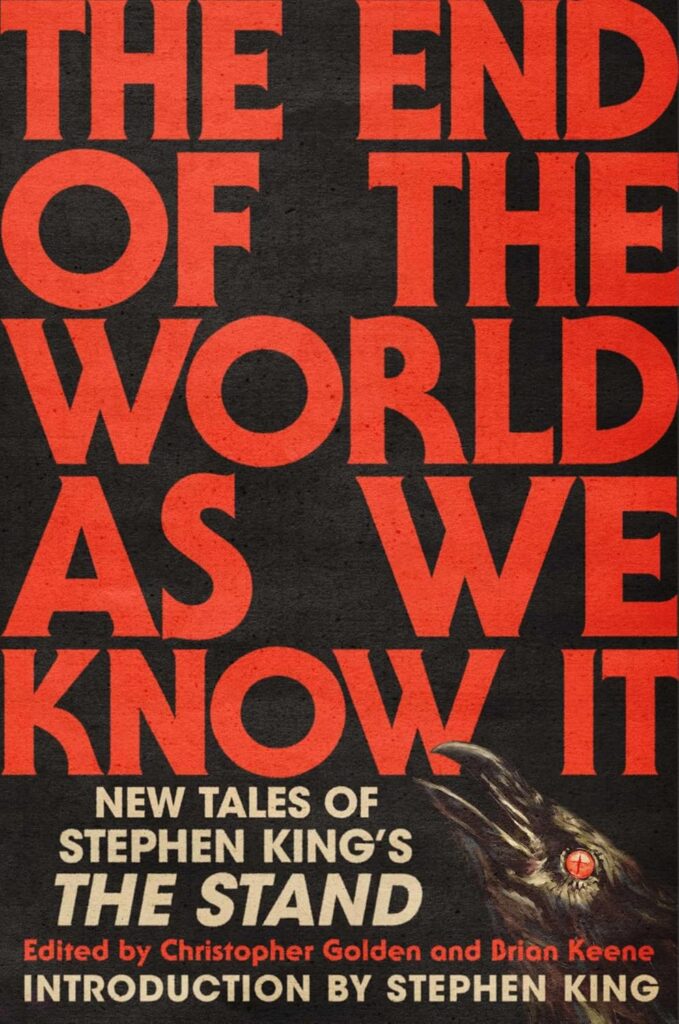
Stephen King’s The Stand has loomed large in apocalyptic fiction since its publication in 1978, offering an epic clash between good and evil in the aftermath of a devastating pandemic. With The End of the World As We Know It, fans are invited to journey back into that devastated world through a mosaic of imaginative perspectives. This anthology isn’t just fan service—it’s a meticulously curated collection that expands the post‑plague landscape through new eyes, voices, and narrative styles, all under the guidance of Golden and Keene, two accomplished horror auteurs entrusted by King himself Target+8Simon & Schuster+8Kingston Frontenac Public Library+8.
From astronauts stranded in orbit to animals navigating an abandoned world, each of the 34 stories stands as its own testament to the versatility and enduring power of King’s apocalyptic vision. Contributors range from genre stalwarts like Joe R. Lansdale and Meg Gardiner to boundary‑pushing voices like Catherynne M. Valente and Chuck Wendig—all of whom lend their unique styles and sensitivities to this sprawling anthology Mr B’s Emporium+12Simon & Schuster+12AP News+12.
Table of Contents
What Makes This Anthology So Special
The structure of The End of the World As We Know It mirrors the grand arc of The Stand itself—beginning with the initial outbreak of the superflu, traversing the shattering aftermath, and finally peering into the far‑flung futures of its survivors. Divided into themed parts—”Down With the Sickness”, “The Long Walk”, “Life Was Such a Wheel”, and “Other Worlds Than These”—each section explores different stages and settings, expanding the scope both geographically and emotionally Kingston Frontenac Public Library+9Wikipedia+9AP News+9.
For instance, Tim Lebbon’s “Grace” takes readers onto a derelict shuttle orbiting a crumbling Earth, capturing the psychological unraveling of isolation from a human and cosmic perspective Simon & Schuster+7People.com+7The Lesser Joke: book reviews and more+7. In a departure from human-centric storytelling, Catriona Ward’s “The African Painted Dog” imagines the world through the eyes of a zoo predator, its confusion and survival instincts heightened by the absence of humanity. Meanwhile, Chuck Wendig’s “Grand Junction” steps decades beyond the book’s events, contemplating how the eternal cycle of good and evil post‑Stand continues with the turning of seasons, offering a hauntingly poetic meditation on morality and history repeated AP News+2Wikipedia+2.
Critics and early reviewers have celebrated the anthology’s scope and execution: Paste Magazine called it “one of the buzziest horror books of the year…a sprawling, epic continuation of Stephen King’s The Stand through the lens of some of the best writers in horror” Kingston Frontenac Public Library+8Simon & Schuster+8Target+8. Library Journal delivered a starred review, praising its “perfectly edited and consciously constructed” approach that “expands, enriches, and improves its source material” Simon & Schuster+1. Meanwhile, AP News pointed out that even readers unfamiliar with The Stand can find much to enjoy, thanks to its human stories and inventive reimaginings of the apocalypse AP News.
Cultural and Literary Resonance
The enduring popularity of The Stand lies not only in its haunting depiction of a world undone, but in its exploration of the moral questions that emerge from catastrophe—how hope can flicker in the darkest moments, how community can rebuild, and how the darkness within humanity can never be fully extinguished. This anthology builds on that legacy, offering new reflections on survival, grief, morality, and the remapping of civilization.
Moreover, the anthology’s diverse contributor list underscores how apocalyptic storytelling transcends cultural, social, and stylistic boundaries. Authors from different backgrounds bring fresh sensibilities, whether filtering the plague through the lens of diaspora, exploring grief from nonhuman perspectives, or interrogating how memory and myth reshape a shattered world. As AP News points out, the anthology breathes new imaginative life into The Stand’s themes, making them feel urgent and often achingly human for contemporary readers AP News.
Reader Experience: Immersion, Emotion, and Impact
Flipping through the nearly 800‑page tome can feel like stepping into an expanded, multidimensional version of The Stand. The pacing varies—some stories are spare and tense, others sprawling and character‑driven—but all share a meticulous craftsmanship that keeps readers emotionally invested. Early blogger reviews articulate this beautifully: one reviewer reflected how the anthology doesn’t contradict itself, instead weaving complementary narratives that deepen and broaden the emotional power of the original novel. From the global scope of Usman T. Malik’s “The Mosque at the End of the World” to the absurd warmth of Wayne Brady and Maurice Broaddus’s submission, the collection honors King’s world while making space for invention and empathy BRIAN KEENE+7The Lesser Joke: book reviews and more+7Wikipedia+7.
Who This Book Is For
If you consider The Stand one of the great grand narratives of speculative fiction—if you’ve hungered for deeper layers, untold sides of the apocalypse, or fresh voices engaging with King’s characters and themes—this anthology is essential. Its breadth makes it perfect for horror aficionados, literary readers, and book clubs eager for a meaty exploration of how civilization collapses and heals. And if you haven’t read The Stand, critics still recommend this anthology as an imaginative companion that might inspire you to finally dive into King’s masterpiece AP NewsPeople.com.
Final Thoughts
The End of the World As We Know It is more than a tribute—it’s an expansive, emotionally rich continuation of a beloved narrative universe. Under the skilled editorial vision of Golden and Keene and with the weighty blessing of Stephen King, the anthology turns the intimidating terrain of apocalypse into a mosaic of individual human experiences, layered with grief, hope, horror, and wonder.
On August 19, 2025, readers will hold in their hands a tome that doesn’t just revisit The Stand, but reimagines its possibilities. It’s a rare companion volume that deepens the original, invites discussion, and stands on its own as a landmark in horror and apocalyptic fiction.