
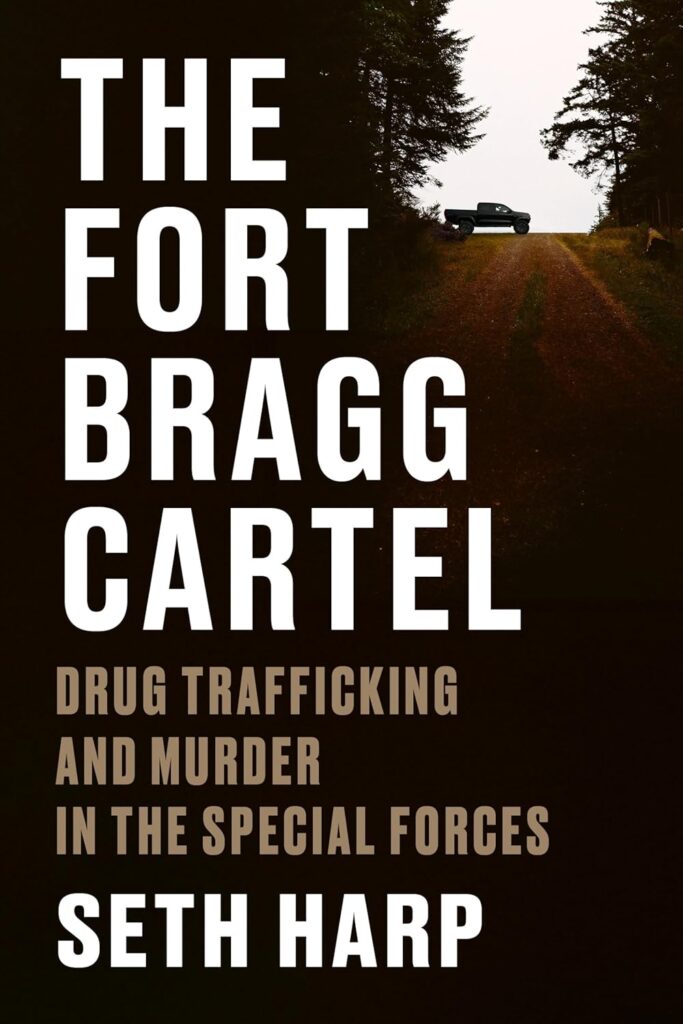
Introduction: When Elite Soldiers Become Outlaws
What happens when the very men trained to fight America’s wars become entangled in criminal enterprises that mirror the enemies they were sworn to defeat? Seth Harp’s The Fort Bragg Cartel: Drug Trafficking and Murder in the Special Forces confronts this chilling question head-on. Equal parts investigative journalism, military exposé, and true-crime narrative, the book plunges readers into a world where the line between patriotism and profiteering dissolves under the haze of cocaine, guns, and clandestine operations gone rogue.
Harp’s work has already generated controversy for its unflinching portrayal of Fort Bragg, home of the Army’s Special Operations Command, as a breeding ground for both elite warriors and illicit activity. In a cultural moment dominated by debates over military accountability, veteran reintegration, and America’s endless “forever wars,” this book is both timely and unnerving.
Table of Contents
Book Overview: The Cartel Within
At its core, The Fort Bragg Cartel tells the story of how members of one of the most respected military installations in the United States—home to Green Berets, Delta Force operators, and psychological warfare experts—became involved in drug trafficking and violent crime.
Rather than focusing solely on a single case, Harp weaves together strands of investigative reporting, declassified documents, and firsthand interviews. He outlines how corruption flourished in an environment of secrecy, where accountability often fell victim to operational necessity. The book reveals:
- Drug pipelines that linked Fort Bragg personnel to narcotics smuggling networks.
- Cover-ups and silence among leadership to avoid scandal.
- Murder investigations that suggested deeper connections between military life and organized crime.
- Cultural pressures inside Special Forces communities that fueled risk-taking behavior, addiction, and moral collapse.
The narrative style is tense, cinematic, and journalistic, with Harp pushing past patriotic mythmaking to expose the uncomfortable truth: that even America’s most disciplined warriors are not immune to corruption.
In-Depth Analysis: Themes & Takeaways
1. The Duality of the Soldier’s Life
One of the most striking themes in Harp’s work is the duality of identity among Special Forces soldiers. By day, these men embody valor, discipline, and brotherhood. By night, some of them slip into a parallel underworld of drugs, violence, and secrecy. Harp shows how the same skills that make soldiers effective in combat—stealth, risk tolerance, and the ability to operate in gray areas—can also make them highly effective criminals.
2. Institutional Blindness
Harp does not frame this story as the tale of a few “bad apples.” Instead, he suggests systemic institutional blindness. Leadership at Fort Bragg often turned a blind eye to misconduct in order to preserve the myth of elite soldiers as untouchable heroes. This raises haunting questions: how many scandals remain buried under the weight of secrecy? How many crimes were quietly handled without ever reaching the public?
3. The Cost of Secrecy
Secrecy is a hallmark of special operations, but Harp argues that it also provided fertile ground for misconduct. In the absence of transparency, accountability faltered. Harp paints secrecy as a double-edged sword: necessary for missions abroad, but dangerous when applied domestically.
4. Trauma and Self-Destruction
The book also highlights the psychological toll of endless deployments. Harp connects substance abuse and criminality to untreated trauma, PTSD, and the disillusionment soldiers feel upon returning home. For some, crime became both an escape and a continuation of the high-stakes adrenaline that combat once provided.
Author Background: Seth Harp’s Investigative Edge
Seth Harp is no stranger to high-stakes reporting. A contributing editor at Rolling Stone and investigative journalist with years of experience covering the U.S. military, Harp has built his career exposing uncomfortable truths about the intersection of war, politics, and crime.
His reporting has spanned from Latin America to the Middle East, often focusing on how American power projects itself abroad and what consequences follow. Harp’s credibility lies not just in his sources, but in his willingness to confront institutions that prefer silence. In The Fort Bragg Cartel, his tone is unflinching but measured, weaving together personal testimonies and factual records with the pacing of a thriller.
Cultural & Political Context
The release of The Fort Bragg Cartel arrives at a moment when America is re-evaluating its relationship with military institutions. The wars in Iraq and Afghanistan left a generation of veterans scarred, while public trust in the military has begun to decline.
This book forces readers to ask difficult questions:
- How much oversight exists over elite units who operate in shadows?
- What cultural conditions inside the military allow misconduct to thrive?
- Are these crimes isolated, or are they symptoms of a broader institutional failure?
Harp’s revelations resonate beyond Fort Bragg itself. They speak to the fragility of hero worship, the costs of perpetual warfare, and the uncomfortable reality that America’s warriors are also human beings—fallible, vulnerable, and capable of darkness.
Strengths of the Book
- Riveting narrative: Reads like a thriller while staying grounded in fact.
- Thorough research: Harp combines investigative journalism with first-person accounts.
- Cultural critique: Goes beyond sensationalism to interrogate systemic issues.
- Courageous storytelling: Unafraid to expose institutions that prefer silence.
Weaknesses of the Book
- Graphic detail: Some readers may find the violence and drug references disturbing.
- Limited solutions: Harp highlights systemic problems but offers fewer answers for reform.
- Narrow scope: While focusing on Fort Bragg is powerful, readers may wish for broader comparisons across other military bases.
Recommended Reads: If You Liked The Fort Bragg Cartel
If this book captured your interest, here are several related works that expand on its themes of war, corruption, and crime within military or government institutions:
- “Kill Chain: Drones and the Rise of High-Tech Assassins” by Andrew Cockburn – A deep dive into military secrecy and lethal technology.
- “Black Flags: The Rise of ISIS” by Joby Warrick – Investigative reporting on insurgency, intelligence, and unintended consequences of U.S. policy.
- “Drug Warrior: Inside the Hunt for El Chapo and the Rise of America’s Opioid Crisis” by Jack Riley – An insider’s look at drug trafficking investigations.
- “Midnight in Chernobyl” by Adam Higginbotham – While not about the military, it exposes how institutions bury disasters under secrecy.
- “Redeployment” by Phil Klay – A fictional but emotionally raw account of soldiers returning from war.
- “War Is a Force That Gives Us Meaning” by Chris Hedges – Explores the psychological and cultural consequences of war.
- “The Fighters” by C.J. Chivers – Personal accounts of American soldiers in Iraq and Afghanistan.
- “American Sniper” by Chris Kyle – A soldier’s memoir that can be contrasted with Harp’s investigative lens.
- “Dirty Wars” by Jeremy Scahill – Explores covert operations and the hidden wars fought in America’s name.
- “Empire of Pain” by Patrick Radden Keefe – Investigates corruption, greed, and the opioid crisis—parallels to secrecy and systemic failure.
Conclusion: Why The Fort Bragg Cartel Matters
Seth Harp’s The Fort Bragg Cartel is not just a story about drugs and murder in the ranks of the Special Forces. It is a story about how secrecy, trauma, and institutional culture can erode even the most elite groups. By turning his investigative lens on Fort Bragg, Harp forces us to reconsider what we think we know about the men and women we entrust with extraordinary power.
For true-crime readers, this book delivers suspense and intrigue. For policy watchers, it raises alarm bells about oversight and accountability. And for everyday readers, it offers a sobering reminder: the heroes we celebrate are still human, and institutions built on silence eventually betray the truth.
In a world where patriotism often demands blind faith, The Fort Bragg Cartel insists on scrutiny—and that insistence may be its most radical act of all.